Retail Media, Connected Commerce & the New CPG Playbook
A conversation with Mary Katherine “MK” Woltz of Danone on how media is being redefined—from a channel to a growth system.
Media Isn’t Supporting Commerce Anymore
It’s becoming inseparable from it.
For years, retail media was treated as an extension of shopper marketing—a powerful but contained layer focused on conversion.
That distinction is disappearing.
As MK Woltz describes it, media is no longer something that sits alongside commerce. It’s increasingly embedded within it—expected to drive measurable business outcomes across multiple touchpoints, not just awareness at the top of the funnel.
That shift sounds incremental.
It isn’t.
“Retail media used to be a layer in commerce. Now it’s embedded within it—and expected to drive real business outcomes.”
— MK Woltz, Senior Director, Connected Commerce Media (Beverages and Plant Based) and Retail Media Strategy at Danone North America
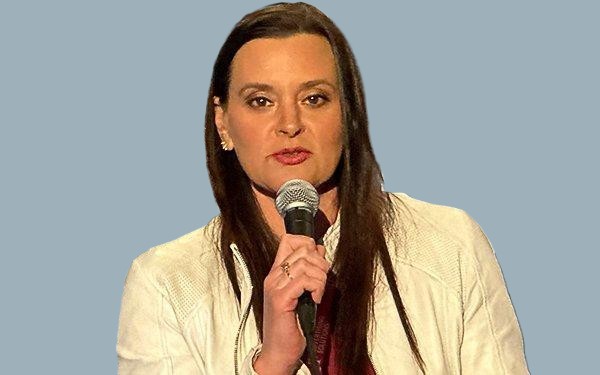
View a Clip from the Interview
Retailers Have Become Media Companies
At the center of this transformation is a fundamental change in roles.
Retailers are no longer just points of sale.
They are now:
- Media platforms
- Data owners
- Measurement partners
Which means brands are no longer simply “buying media.”
They’re entering into a different kind of relationship—one that requires closer alignment, shared objectives, and a more continuous cycle of testing and learning.
What was once transactional is becoming collaborative.
And increasingly, growth is something that has to be built together.
Retailers aren’t just customers anymore—they’re media partners, data partners, and part of how we drive growth. — MK Woltz, Senior Director, Connected Commerce Media (Beverages and Plant Based) and Retail Media Strategy at Danone North America
The Balance That Defines Modern Marketing
If retail media introduces new opportunity, it also sharpens an old tension.
How do you balance immediate performance with long-term brand value?
Closed-loop measurement offers unprecedented visibility into what drives sales. But it also risks over-weighting what can be measured in the short term.
At Danone, the answer isn’t to choose one over the other.
It’s to define roles more clearly.
Some investments are designed to convert.
Others are designed to endure.
Retail media may accelerate the former—but it works best when it’s connected to the latter.
A Portfolio, Not a Campaign
This becomes especially important in complex, highly competitive categories.
Across brands like Activia, Oikos, Silk, and International Delight, differentiation isn’t just about product.
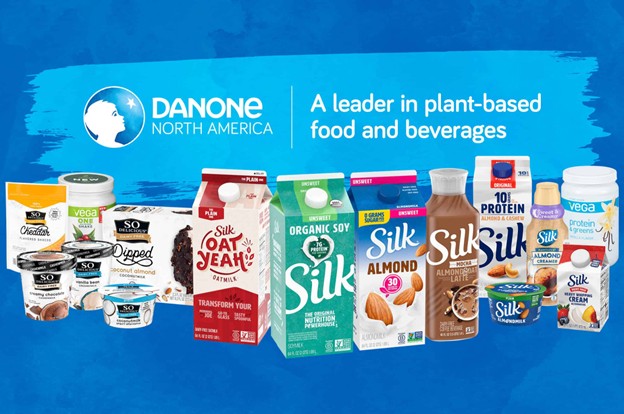
It’s about staying culturally relevant—showing up in the right moments, with the right signals, in ways that resonate across audiences.
That’s where the model begins to expand.
Retail media connects directly to purchase.
But it doesn’t operate alone.
Experiential activations, sponsorships, and cultural partnerships—whether at events like Coachella or through sports affiliations—play a different role.
They create visibility.
They generate content.
They build connection.
And increasingly, they are being integrated into the same performance-driven system rather than treated as separate brand-building exercises.
Purpose, Without Overstatement
As a certified B Corp, Danone brings another dimension to how these decisions are made.
But here, too, the approach is pragmatic.
Rather than leading with broad sustainability messaging in every campaign, the focus is on alignment—working with credible partners, embedding values into product stories, and identifying moments where purpose and performance naturally intersect.
The industry, as MK notes, is still working through how to operationalize that connection.
For now, it’s less about declaring intent— and more about demonstrating it in context.

To learn more from MK Woltz about how today’s marketing challenge is to drive short-term results without losing sight of long-term brand building, watch the video interview on Internationalist Marketing TV (IMTV) on YouTube by CLICKING HERE …
Subscribe FREE to Internationalist Marketing TV on YouTube to get notifications of new videos.
In this Trendsetters conversation, we discuss:
- Retail media has moved from a shopper marketing add-on to one of the fastest-growing media sectors. From your vantage point, what has fundamentally changed in how brands think about media?
- Retailers now sit at the intersection of data, distribution, and media ownership. How has that shifted the power dynamic between brands and retail partners?
- In mature, highly competitive categories like dairy and plant-based, differentiation is difficult. How does retailer first-party data sharpen media precision without over-complicating messaging?
- Closed-loop measurement is one of retail media’s promises. How do you balance short-term sales attribution with long-term brand equity?
- With inflation and private label reshaping consumer behavior, how should CPG brands rethink the price-value equation in their media strategy?
- You oversee both retail media and sponsorship/licensing. Where do experiential and cultural partnerships fit in a performance-driven environment?
Listen to MK Woltz discuss how media isn’t just driving awareness anymore—it’s expected to actually deliver for the business.
Search the entire Trendsetters podcast series here on iHeartRadio’s Spreaker or wherever you download your podcasts.

From Channels to Systems
What emerges from this conversation is not just a shift in media strategy.
It’s a shift in how marketing itself is organized.
From: Channels and campaigns
To: Systems and outcomes
Where media, commerce, partnerships, and product innovation are increasingly interconnected.
And where success depends not just on optimization— but on orchestration.
What Comes Next
Retail media will continue to grow.
But its real impact isn’t just scale. It’s integration.
The blurring of boundaries between where brands show up, how they connect, and how they drive growth.
Because the question is no longer: Where should we invest?
But: How do all of these investments work together— to deliver results today, and build value that lasts?