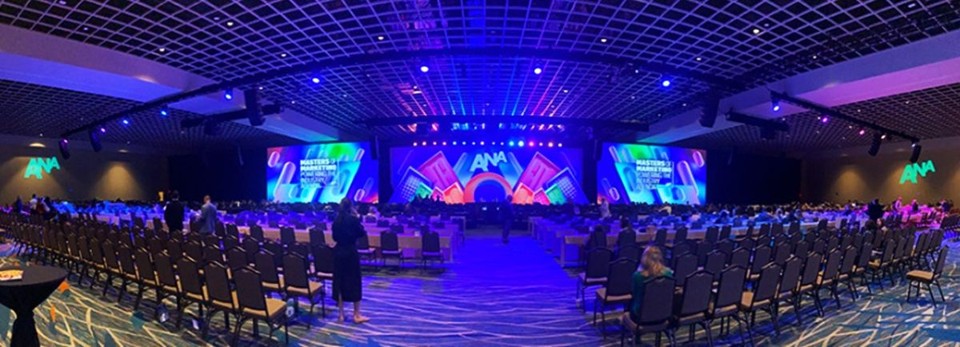
Bob Liodice and the View from the Center of Marketing’s Transformation
After more than three decades at the ANA, a rare perspective on what marketing has become—and what it takes to lead through reinvention.
When Bob Liodice concluded his opening remarks at this year’s ANA Masters of Marketing, the audience rose to its feet.
It was a fitting acknowledgment of a leader preparing to conclude more than three decades with the organization—and his final Masters as CEO.
Bob joined the Association of National Advertisers in 1995, when the Internet was only beginning to transform business, advertising still dominated much of the marketing conversation, and the extraordinary proliferation of media, data and technology lay largely ahead.
Over the ensuing decades, he helped guide the ANA through its own difficult moments and extraordinary growth. The organization expanded from fewer than 200 member companies to more than 1,600, while broadening its programs and capabilities to serve an increasingly complex marketing profession.
But longevity itself isn’t the story. Perspective is.
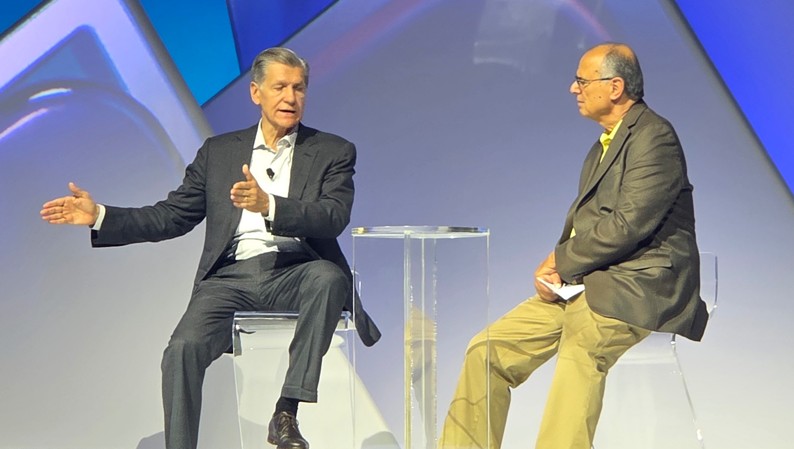
Marc Pritchard, Chief Brand Officer, Procter & Gamble, with Bob Liodice.
And as I listened to some of the world’s leading marketers take the stage following Bob’s remarks, I was struck by just how much the profession he has helped represent has changed.
When the Job Keeps Changing
The opening day of Masters offered an intriguing picture of modern marketing.
Marc Pritchard of Procter & Gamble argued that robots can’t build brands. Technology can amplify creativity, but the ideas, insights and emotional connections that make brands meaningful remain fundamentally human.
Manolo Arroyo described Coca-Cola’s reinvention of its marketing operating model, connecting products, retail, live experiences and digital capabilities while changing how the company works.
Leslie Berland discussed Verizon’s efforts to become more culturally relevant, distinctive and agile—changes that required rethinking internal processes as well as external communications.
Marcus Fischer spoke about helping Harley-Davidson rediscover its soul, moving from intimidation toward invitation without sacrificing the identity and community that make the brand distinctive.
Marcel Marcondes of AB InBev emphasized that creativity must deliver measurable business growth, while Julia Goldin of LEGO made a compelling case for imagination, human intuition, and challenging long-held assumptions about who a brand can serve. LEGO’s ability to connect with children and adults across different interests and generations offered a reminder that growth can come from seeing familiar audiences—and possibilities—differently.
Listening to these different perspectives, I couldn’t help thinking about the generations of marketing leaders Bob Liodice has worked with—and how dramatically the conversations have changed over those years.
These are leaders responsible for enormous global brands, with all the advantages and complications that scale brings. Their experiences are not the only models of marketing innovation. But the responsibility of guiding household names through changing consumer expectations and business realities gives their perspectives particular weight.
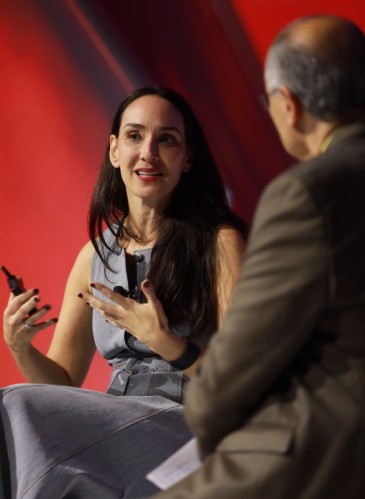
Leslie Berland, Chief Marketing Officer, Verizon, in conversation with Bob Liodice.
What interested me was how often transformation began with the recognition that established approaches were no longer producing the desired results.
We celebrate reinvention as evidence of visionary leadership. Yet some of the most consequential transformations begin with the uncomfortable realization that yesterday’s successful formula is no longer working.
And what was being reinvented wasn’t simply the advertising. It was the organization, its capabilities, its culture, and, increasingly, its understanding of the role marketing should play.
For Bob, these changing expectations have also meant helping the ANA evolve alongside the profession it serves.
Thirty Years of Changing Vocabulary
Of course, marketers have acquired an extraordinary vocabulary along the way.
We’ve been integrated, digital, data-driven, customer-centric, omnichannel, programmatic, purpose-led, agile, and AI-enabled.
We’ve navigated CRM, DSPs, DMPs, CDPs, CTV, retail media networks, martech stacks, first-party data, creator economies, and more acronyms than anyone should reasonably be expected to remember.
Bob even treated us to a hilarious video by Wes Waterston called Adtech Is So Easy, poking fun at advertising’s alphabet soup—a reminder that an industry devoted to communication has become remarkably adept at making itself difficult to understand.
Some of these terms have faded. Others have become so fundamental that we hardly need to name them anymore. But beneath the changing language, something more consequential was happening. The vocabulary changed because the job changed.
Marketing didn’t simply acquire more tools. It acquired more responsibility.
Today’s marketing leaders are expected to understand customers and culture, creativity and commerce, technology and trust. They must deliver growth while navigating increasingly complicated relationships among consumers, agencies, platforms, procurement, technology providers and corporate leadership.
They are responsible not simply for what a brand says, but increasingly for what it does—and how people experience it.
Perhaps that’s why the most persistent themes at this year’s Masters were not especially new: humanity, imagination, participation, experience, culture. After decades of technological transformation, some of the world’s most sophisticated marketers were reminding us of the enduring importance of human connection.
The more powerful the tools become, the more essential it seems to understand what those tools are actually for.
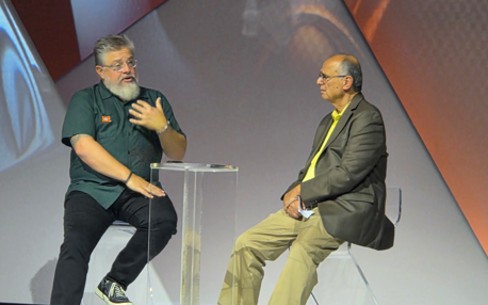
Marcus Fischer, Chief Brand Officer, Harley-Davidson, with Bob Liodice.
Leading an Organization Through Reinvention
And this is where Bob Liodice’s tenure becomes particularly meaningful.
He has spent more than three decades helping to lead an organization through the challenges, contradictions, and reinventions of a profession whose responsibilities have continually expanded. In doing so, he has gained a perspective few others possess.
An industry association doesn’t simply observe change. At its best, it brings people together to confront emerging challenges, identifies issues requiring collective attention, encourages research, develops capabilities, and helps its members navigate unfamiliar territory.
The ANA itself has had to evolve as the profession it represents has changed. That is no small leadership assignment, particularly in a sprawling American marketplace with an extraordinary range of marketing organizations, disciplines, business models, and competing priorities.
Bob’s opening remarks reflected many of those responsibilities: media, measurement, technology, agency collaboration, cultural marketing, talent, and the continuing pursuit of growth. Not every challenge is new. Not every solution is obvious.
And perhaps that’s part of the challenge of leading an organization like the ANA: balancing the immediate needs of its members with the larger shifts shaping the future of the profession. Doing so over three decades requires a particular kind of endurance—and a willingness to keep adapting.
Consider, too, the contrast in tenure. Corporate CMOs often hold their positions for only a handful of years. Bob Liodice has worked with successive generations of marketing leaders through multiple waves of transformation, each arriving with its own assumptions about what matters most.
That continuity offers something increasingly rare. The ability to remember not simply what happened, but what people believed while it was happening…
- What seemed revolutionary at the time?
- Which problems proved more stubborn than anyone expected?
- What did marketers get right?
- What did they misunderstand?
- And which, apparently, new challenges are simply familiar questions dressed in another era’s vocabulary?
Those are questions that cannot be answered by the latest trend report alone.
And with Stephan Loerke also preparing to conclude his long leadership of the World Federation of Advertisers, there is a broader sense of generational transition among the institutions that have helped represent marketers through these decades.
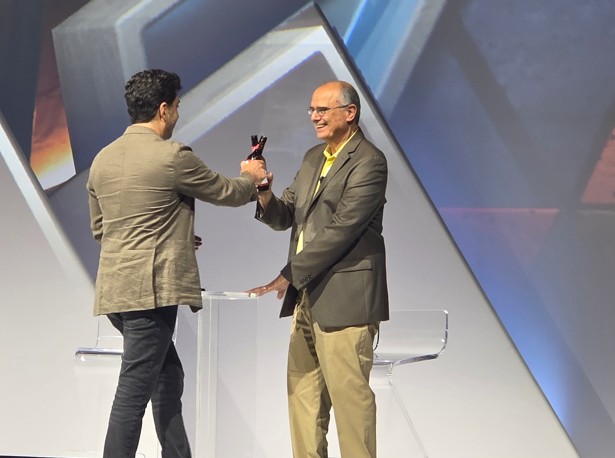
A lighter moment at Masters: AB InBev’s Marcel Marcondes offers Bob Liodice a Budweiser.
Marcel’s salute: “This Bud’s for You!”
Two Views of the Same Changing Profession
I began at Advertising Age just a couple of years before Bob joined the ANA, so we’ve watched much of this transformation unfold from different vantage points.
Bob has helped lead an organization serving marketers through those changes. I’ve spent much of my professional life listening to marketers around the world and trying to understand not only what was changing, but why it mattered.
Not long after Bob announced his plans to step down, we had lunch together. I told him that after more than three decades at the ANA, he possessed an extraordinary perspective on how marketing had changed.
“But so do you,” he replied. “You’ve been through it all too—just as I have.” It was a generous observation, and one that stayed with me.
It made me realize that experience and perspective have become increasingly valuable in a profession so preoccupied with what comes next.
What Comes Next
This year’s Masters offered plenty of evidence that marketing is still reinventing itself.
Artificial intelligence is changing how work gets done. Commerce and media are converging. Brands are seeking more meaningful ways to participate in culture and people’s lives. Organizations are reconsidering their operating models, capabilities and assumptions about growth.
Yet the questions beneath these developments remain remarkably human: How do we create value? How do we earn trust? How do we remain relevant? How do we build organizations capable of learning and changing? And how do we use marketing’s growing influence responsibly?
Bob has watched generations of marketers grapple with those questions, even as the answers—and the language used to describe them—have changed.
He has also helped lead an organization that has had to grapple with them itself.
I hope Bob takes the opportunity to share more of what those years have taught him.
Because marketing has no shortage of predictions about its future.
What it has far less of is perspective on how we arrived here.