The 2026 Internationalists of the Year
The story of this year’s Internationalists is the evolution of marketing leadership itself.
The most influential marketers today are not simply building brands.
They are helping people navigate complexity, creating confidence in uncertain times, building communities around shared passions, humanizing technology, and finding new ways for organizations to create meaningful value.
The 2026 Internationalists of the Year represent companies from around the world and industries ranging from financial services and technology to mobility, retail, consumer goods, and energy. Yet what unites them is not geography, category, or budget.
It is influence.
An Internationalist is a marketer whose ideas, leadership, and influence travel.
This year’s class demonstrates how the role of marketing continues to evolve. The strongest leaders are no longer focused solely on communications. They are shaping culture, driving transformation, building trust, enabling growth, and helping organizations become more human.
Together, they offer a compelling picture of where marketing leadership is heading next.
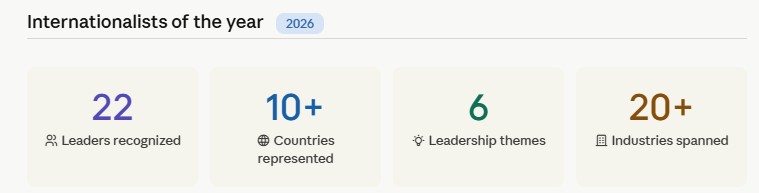
While their industries, markets, and challenges differ, several common themes emerge across this year’s Internationalists. Together, they reveal a profession that is expanding beyond communications and embracing a broader role in shaping growth, trust, innovation, and human connection.
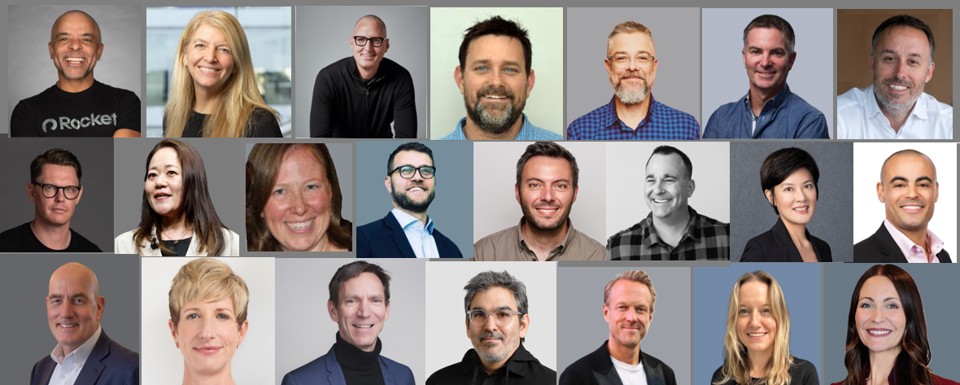
Together, these 22 leaders offer a compelling picture of where marketing leadership is heading next.
The following leadership themes offer one lens through which to view the 2026 class.
BUILDING ASPIRATION
Helping people imagine—and pursue—a better future.
The strongest brands do more than solve problems. They help people imagine what is possible.
In an era marked by uncertainty, economic pressure, and rapid technological change, aspiration has become one of marketing’s most powerful tools. The leaders in this category understand that consumers are not simply purchasing products and services. They are investing in hopes, goals, and future versions of themselves.
Whether helping families pursue homeownership, encouraging consumers to take control of their financial futures, or inspiring the next generation through innovation and mobility, these marketers demonstrate how brands can create momentum by helping people move forward.
The result is marketing that does more than drive transactions. It builds belief.
Jonathan Mildenhall
Chief Marketing Officer, Rocket Companies
Turning homeownership into a shared aspiration.
A rare two-time Internationalist, Jonathan Mildenhall has built his career on a simple but powerful belief: great brands help people believe in possibilities. At Rocket, he has transformed a traditionally functional financial category into a platform for aspiration, helping consumers see homeownership not simply as a transaction, but as part of the American dream.
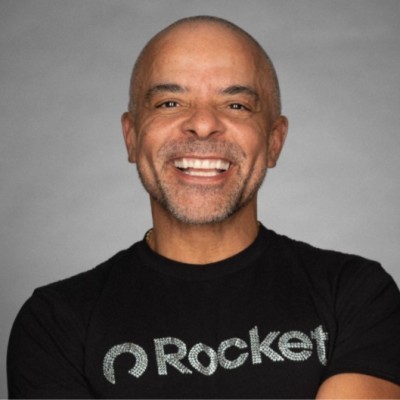
Through the “Own the Dream” platform and bold initiatives such as inviting a Super Bowl audience to sing “Take Me Home, Country Roads,” Mildenhall has demonstrated that even categories often viewed as transactional can create emotional connection and cultural relevance. His work is a reminder that the most powerful marketing does more than sell products—it helps people imagine a better future.
Margaret Jobling
Group Chief Marketing Officer, NatWest Group
Helping people take the next step toward their financial future.
Margaret Jobling has helped redefine the role of marketing within one of Britain’s oldest financial institutions by focusing on a simple but powerful idea: helping people move forward. Through NatWest’s Tomorrow Begins Today platform, she has positioned the bank not merely as a provider of financial services, but as a partner in building confidence and possibility.
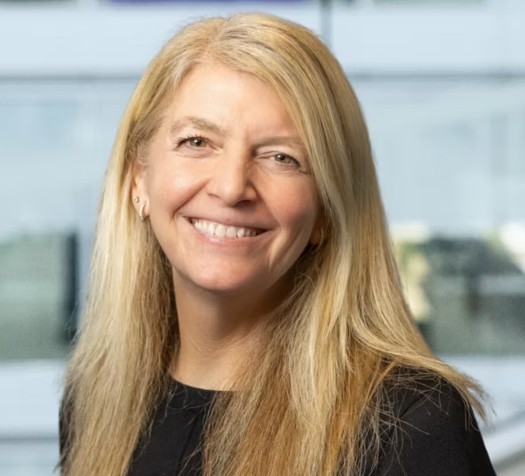
At the same time, Jobling has modernized NatWest’s marketing capabilities through data ownership, analytics, and technology, ensuring that creativity and accountability work hand in hand. Her leadership reflects a broader shift occurring across marketing today—from promoting products to helping people navigate increasingly complex lives. In an era when trust is fragmented and consumers often seek advice from social platforms before experts, Jobling’s work demonstrates how brands can create value by providing clarity, confidence, and meaningful support.
Sean Gilpin
Chief Marketing Officer, Hyundai Motor America
Making the future feel relevant, accessible, and human.

Sean Gilpin has helped position Hyundai as a brand that looks forward without losing sight of the people it serves. Whether through Hyundai’s Next Starts Now World Cup platform or campaigns that connect with audiences ranging from Gen Z to GenMORE+, his work consistently focuses on turning innovation into something consumers can see, feel, and relate to.
Rather than treating technology as an end in itself, Gilpin uses it as a vehicle for possibility—linking advances in mobility, robotics, and sustainability to the aspirations of everyday people. His approach recognizes that in a crowded marketplace, brands do not stand out simply by being innovative. They stand out by making innovation meaningful. Through a combination of cultural relevance, data-driven precision, and human-centered storytelling, Gilpin demonstrates how marketers can build excitement about what comes next while remaining grounded in what matters now.
COMMUNITY & PARTICIPATION
Marketing that brings people together.
The most effective brands today understand that growth is no longer driven by awareness alone. It is driven by participation.
The leaders in this category recognize that people want more than products and services. They want to belong to communities, pursue shared passions, and play an active role in experiences that matter to them. Whether rooted in music, sports, outdoor adventure, craftsmanship, or commerce, these marketers have found ways to transform audiences into participants.
Rather than broadening their appeal by moving away from their core communities, they have achieved growth by moving closer to them. They listen more carefully, engage more authentically, and create opportunities for people to contribute, connect, and share in something larger than themselves.
The result is marketing that does more than attract attention. It creates participation—and participation creates lasting connection.
Bill Neff
Head of Marketing, YETI
Growing by serving passionate communities.

YETI’s growth story offers an important lesson for modern marketers: scale does not require abandoning the people who made a brand successful in the first place. Under Bill Neff’s leadership, YETI has expanded from a niche outdoor company serving anglers and hunters into a global lifestyle brand spanning more than 200 products and multiple consumer communities.
Yet rather than chasing growth through mass appeal, YETI has remained rooted in the passions, experiences, and stories of the people who use its products. By focusing on community energy, authenticity, and earned relationships, Neff has helped demonstrate that participation can be a powerful growth strategy. The result is a brand that continues to expand its reach while maintaining the credibility and loyalty that made it distinctive from the beginning.
Marcus Fischer
Chief Brand Officer, HARLEY-DAVIDSON MOTOR COMPANY
Rediscovering the power of the ride.
When Marcus Fischer joined Harley-Davidson as Chief Brand Officer in 2025, he faced a challenge confronting many iconic brands: how do you honor a legendary past while remaining relevant to future generations? Rather than reinventing Harley, Fischer focused on uncovering the universal emotion at the heart of the brand. His answer was deceptively simple: ride. More than a product, a demographic, or a motorcycle category, riding represents freedom, adventure, connection, and personal expression.

Under his leadership, Harley has begun shifting the conversation from who rides to why people ride, opening the brand to a broader and more diverse audience while preserving its authenticity. Particularly striking is that Fischer arrived from an agency career and is still learning to ride himself—a perspective that may have helped him see the brand through fresh eyes. His work demonstrates that the strongest transformations often come not from changing what a brand stands for, but from rediscovering the human truth that made it powerful in the first place.
Mike Nelson
Vice President, Marketing, Martin Guitar (C. F. Martin & Co.®)
Unleashing the artist within.
For nearly two centuries, Martin Guitar has been revered for its craftsmanship, quality, and iconic sound. Under Mike Nelson’s leadership, however, the company has embraced a broader vision of its role in people’s lives. Rather than focusing solely on building the world’s finest guitars, Martin has repositioned its purpose around helping individuals express themselves through music.

Inspired in part by brands such as Nike, Nelson helped shift the company’s perspective from product-centered storytelling to consumer-centered experiences, reframing Martin’s mission as “unleashing the artist within.” The result has been a brand that remains deeply respected by professional musicians while becoming more welcoming and relevant to aspiring players of all skill levels. His work demonstrates how heritage brands can honor their legacy while expanding participation, ensuring that craftsmanship remains meaningful to new generations of creators.
Sean Summers
EVP and Chief Marketing Officer, Mercado Libre
Connecting millions through commerce.

In a region defined by diverse cultures, economies, and consumer behaviors, Sean Summers has helped transform Mercado Libre into one of Latin America’s most influential platforms. As the company has grown into the region’s leading e-commerce marketplace, Summers has balanced the challenge of building a consistent brand across multiple countries while remaining deeply connected to local realities.
His approach combines data-driven growth with an understanding that commerce is ultimately about people, opportunity, and participation. By creating campaigns and experiences that resonate within individual markets while reinforcing a shared regional identity, he has helped Mercado Libre compete successfully against global giants while strengthening its role in everyday life across Latin America. Summers’ leadership demonstrates that the most powerful platforms do more than facilitate transactions—they create connections between consumers, entrepreneurs, and communities at scale.
HUMANIZING TECHNOLOGY
Making innovation more meaningful.
Technology is transforming nearly every aspect of modern life, but technology alone rarely creates lasting connections. The leaders in this category understand that innovation succeeds only when people can see themselves in it.
Whether helping consumers navigate financial services, introducing new forms of mobility, or enabling organizations to adopt AI at enterprise scale, these marketers focus on translating complexity into experiences that feel useful, understandable, and relevant. They recognize that trust, confidence, and human understanding remain just as important as algorithms, automation, and data.
Rather than asking what technology can do, they ask what technology can do for people.
The result is innovation that feels less intimidating, more accessible, and ultimately more meaningful.
David Sandström
Chief Marketing Officer, Klarna
Making finance feel human.

As Chief Marketing Officer of Klarna, David Sandström has helped transform a Swedish fintech challenger into one of the world’s most recognizable consumer financial brands. Early in that journey, he used culture, creativity, and bold storytelling to differentiate Klarna in a category dominated by traditional financial institutions. More recently, he has focused on a different challenge: helping consumers understand how technology—and particularly AI—can make financial services more useful, accessible, and human.
Under his leadership, Klarna has become a model for how organizations can combine automation, personalization, and creativity at scale without losing emotional connection. Sandström’s work reflects a simple but powerful belief: technology should not merely inform people. It should help them feel understood. In an era increasingly shaped by AI, his leadership demonstrates how innovation becomes most valuable when it strengthens human experiences rather than replacing them.
Yukiko Otani
Division General Manager, Marketing, Nissan Japan
Giving innovation a human story.
Technology can inspire, but only when people understand why it matters. Yukiko Otani has helped Nissan navigate one of the most complex challenges facing modern marketers: translating advanced innovation into stories that feel relevant to everyday life. Whether communicating new mobility solutions, electrification, or emerging technologies, her work consistently focuses on the human impact of innovation rather than the technology itself.

Working within one of Japan’s most influential global brands, she has demonstrated how creativity, empathy, and cultural understanding can make even the most sophisticated advances feel approachable and meaningful. Her leadership reflects a broader truth shaping marketing today: consumers rarely connect with technology for its own sake. They connect with the possibilities it creates. By helping people see themselves in the future, Otani has shown how innovation becomes most powerful when it is grounded in human experience.
Laura Johnson
Vice President, Brand Creative & Enablement, SAP
Helping organizations make AI useful.
As artificial intelligence reshapes the way organizations operate, Laura Johnson is helping one of the world’s largest enterprise technology companies translate innovation into practical value. As Vice President of Brand Creative & Enablement at SAP, she has helped transform brand from a static set of guidelines into a living capability that enables teams across the organization to move faster, stay aligned, and evolve continuously.

Her work sits at the intersection of technology, creativity, and organizational change, building the systems and frameworks that allow brand strategy to become an enterprise-wide capability rather than simply a marketing function. At a time when many organizations are struggling to adapt to the pace of AI-driven transformation, Johnson’s leadership demonstrates that technology alone is never enough. Lasting change occurs when people embrace new ways of working and can no longer imagine returning to the old ones. Her work reflects a growing reality of modern marketing: the future belongs not only to those who create great ideas, but to those who enable organizations to bring them to life at scale.
CULTURE, RELEVANCE & MODERN BRAND BUILDING
Earning a place in people’s lives.
The rules of brand building have not disappeared. But the environment in which brands operate has changed dramatically. Consumers move fluidly across platforms, communities, cultures, and conversations, making relevance more difficult—and more important—than ever before.
The leaders in this category understand that modern brands cannot simply broadcast messages and expect attention. They must earn it. Through cultural fluency, creative experimentation, local relevance, and a deep understanding of how people engage with brands today, these marketers have found ways to remain meaningful in an increasingly fragmented world.
Whether managing global portfolios, challenger brands, heritage institutions, or emerging cultural phenomena, they share a common belief: relevance is not something a brand claims. It is something a brand earns.
The result is marketing that does more than communicate. It becomes part of culture.
Art Valkenburg
Group Vice President, Media & Digital Transformation, Carlsberg Group
Making global brands culturally relevant.

For generations, global marketers have wrestled with the challenge of balancing consistency and local relevance. Art Valkenburg is helping redefine that equation for a new era. Through his leadership at Carlsberg Group, he has championed an approach that views media not simply as a distribution channel, but as a pathway into culture. Whether helping Tuborg engage younger audiences through music partnerships or working with Liverpool FC to transform “You’ll Never Walk Alone” into a more inclusive experience for deaf supporters, .
Valkenburg focuses on creating participation rather than interruption. His work recognizes that modern brands cannot rely solely on global campaigns to remain relevant. They must earn their place within the communities, conversations, and cultural moments that matter most. In a world where audiences increasingly shape brand narratives themselves, Valkenburg demonstrates how global brands can remain coherent while becoming more connected, inclusive, and culturally
Emmanuel (Manu) Orssaud
Chief Marketing Officer, Duolingo
Moving at the speed of culture.
Few brands have mastered cultural relevance as effectively as Duolingo. Under Manu Orssaud’s leadership, the language-learning platform has transformed itself from a useful educational tool into one of the most recognizable and talked-about brands in the world. Rather than relying on traditional marketing playbooks, Orssaud has built a culture that encourages experimentation, rapid response, and creative risk-taking.

Whether capitalizing on unexpected social trends or creating viral moments that travel across platforms and markets, Duolingo consistently finds ways to participate in culture rather than simply advertise within it. At the same time, the brand’s playful personality remains firmly connected to its mission of helping people learn and communicate across languages and borders. Orssaud’s leadership demonstrates that relevance is not achieved through speed alone. It comes from creating an environment where creativity, trust, and cultural awareness can thrive together.
Todd Kaplan
Chief Marketing Officer, North America, The Kraft Heinz Company
Keeping iconic brands culturally vibrant.
Todd Kaplan believes that brand building is more important than ever in an age of distraction. Leading marketing across one of the world’s largest portfolios of household brands, he has demonstrated how iconic products can remain culturally relevant without abandoning the equity that made them successful. Whether through unexpected collaborations, playful activations, or product innovations inspired by real consumer behavior, Kaplan consistently starts with a simple principle: brands must mean something beyond what they sell.

From condiment partnerships with music producer Mustard to the global launch of the HEINZ Dipper—a fry box with a built-in ketchup compartment inspired by a universal consumer frustration—his work reflects a belief that relevance comes from understanding how people actually live. At a time when many brands chase attention, Kaplan’s leadership demonstrates that cultural vitality is built through insight, consistency, and a willingness to evolve without losing sight of what made a brand matter in the first place.
Loretta Lee
Marketing Director, Asia & Europe, Asahi Beer International
Building global brands through local experiences.

In today’s beverage marketplace, global scale alone is no longer enough. Success depends on understanding local cultures, consumer behaviors, and moments that matter. Loretta Lee has demonstrated how international brands can maintain consistency while adapting to the needs of diverse markets across Asia and beyond. From the successful launch of Asahi Super Dry Dry Crystal to partnerships spanning sports, entertainment, and contemporary art, her work combines global brand stewardship with deep local relevance.
Rather than simply translating campaigns across markets, Lee focuses on creating experiences that resonate within specific cultural contexts while strengthening the broader Asahi brand. Her leadership reflects one of modern marketing’s most important lessons: global brands grow strongest when they feel local. By balancing innovation, creativity, and cultural intelligence, Lee has helped transform Asahi from a heritage beer brand into a more contemporary and widely relevant lifestyle brand.
Michael Kirtman
Chief Brand Officer, Valvoline Global
Building a global brand through local relevance.

Michael Kirtman believes that global brands succeed not by imposing uniformity, but by finding ways to remain relevant in the lives of local consumers. Since joining Valvoline Global, he has focused on one of marketing’s oldest—and most enduring—challenges: balancing global consistency with local relevance. The company’s World Cup platform reflects that philosophy, creating a shared global idea while allowing individual markets to adapt it to their own cultures, audiences, and realities
Drawing on more than 16 years at Procter & Gamble and now leading a 160-year-old global brand, Kirtman combines brand discipline with cultural sensitivity. His approach recognizes that in an increasingly fragmented media environment, simply showing up is no longer enough. Relevance must be earned. His work demonstrates how international brands can remain coherent, distinctive, and meaningful while speaking to consumers in ways that feel authentically local.
GROWTH, TRANSFORMATION & REINVENTION
Evolving without losing what matters.
The most successful organizations rarely stand still. Yet growth alone is not enough. Today’s leaders must navigate shifting consumer expectations, technological disruption, changing business models, and increasingly competitive markets—all while preserving the qualities that made their brands successful in the first place.
The marketers in this category understand that transformation is not simply about change. It is about evolution with purpose. Whether scaling rapidly, redefining a category, reinventing a legacy business, or building entirely new identities, they have demonstrated that sustainable growth requires both vision and discipline.
Rather than viewing transformation as a destination, they see it as an ongoing process of adaptation, learning, and renewal.
The result is marketing that does more than support growth. It helps shape what an organization becomes next.
Joe McCambley
Chief Marketing Officer, Saatva
Proving that brand and performance can grow together.
For years, marketers have debated whether growth is driven by brand building or performance marketing. Joe McCambley has spent much of his career proving that the most successful organizations refuse to choose between the two. As Chief Marketing Officer of Saatva, he helped transform a single-channel direct-to-consumer mattress company into one of America’s leading luxury sleep brands, building a sophisticated multi-channel marketing operation while simultaneously reducing marketing costs as a percentage of revenue.

His approach combines the discipline of performance measurement with the long-term value of brand investment, demonstrating that storytelling and accountability are not competing priorities. At a time when many organizations struggle to balance short-term results with long-term growth, McCambley’s leadership offers a compelling reminder that the strongest brands are often built when creativity and commerce work together.
Robin Green
President, HOKA
Scaling a brand without losing its soul.
Few leadership challenges are as difficult as sustaining momentum once a brand becomes successful. Since becoming President of HOKA, Robin Green has been guiding one of the world’s fastest-growing performance brands through its next phase of expansion. Under her leadership, HOKA has continued to grow globally, deepen relationships with athletes and consumers, and extend its influence beyond performance running into broader lifestyle and wellness culture.

Yet despite its rapid growth, the brand has remained rooted in the emotional connections that helped fuel its success in the first place. Through community-building initiatives, athlete partnerships, product innovation, and a focus on shared experiences, Green has helped demonstrate that growth and authenticity do not have to be competing priorities. Her leadership reflects an increasingly important lesson for modern marketers: the goal is not simply to build brand heat, but to sustain it in ways that remain meaningful over time.
Francis Perrin
Chief Brand & Sustainability Officer, Rehlko
Building a new identity from a powerful legacy.
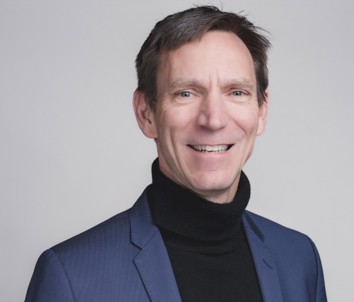
Few marketing challenges are more complex than helping an established business redefine itself while preserving the trust and credibility it has built over decades. As Chief Brand & Sustainability Officer, Francis Perrin has played a central role in the transformation of Kohler Energy into Rehlko, helping create a new global identity for a business operating at the intersection of energy resilience, sustainability, and critical infrastructure.
Drawing on experience gained at consumer brand leaders including Procter & Gamble, L’Oréal, Pernod Ricard, and Bel Brands, Perrin has brought a consumer marketer’s understanding of brand building to a highly technical category. His work recognizes that transformation is not simply about changing a name or visual identity. It requires creating a compelling narrative that employees, customers, partners, and stakeholders can believe in. As organizations across industries face increasing pressure to adapt and evolve, Perrin’s leadership demonstrates how brand can serve as a strategic tool for guiding change while honoring the strengths that made a company successful in the first place.
Marcelo Kertész
Chief Marketing Officer, Manscaped
Expanding a brand beyond its original category.
Few brands have disrupted a category as successfully as Manscaped. Having built its reputation through humor, cultural relevance, and a willingness to challenge conventions around men’s personal care, the company now faces a different challenge: growth beyond its original success. Under Marcelo Kertész’s leadership, Manscaped has begun expanding from below-the-waist grooming into broader men’s lifestyle and grooming categories, including facial care.

The move reflects a deeper understanding of modern brand building. Today’s strongest challenger brands cannot rely indefinitely on disruption alone. They must evolve their relevance while maintaining the distinctive personality that attracted consumers in the first place. By balancing category expansion with brand consistency, Kertész is helping demonstrate how modern brands can grow beyond their origins without losing their identity.
PURPOSE, IMPACT & RESPONSIBILITY
Creating value beyond the transaction.
For years, marketers have debated the role of purpose in business. Today’s most effective leaders have moved beyond the debate. Rather than asking whether brands should stand for something, they focus on how brands can create meaningful value for the people, communities, and environments they touch.
The leaders in this category demonstrate that impact takes many forms. Whether encouraging participation in the outdoors, advancing sustainability through global partnerships, or challenging expectations about how brands can contribute to culture and community, they share a common belief: marketing has a responsibility that extends beyond products and promotions.
Their work reflects a broader evolution taking place across business today. Success is increasingly measured not only by growth and market share, but also by the positive role brands play in people’s lives.
The result is marketing that creates value beyond the transaction—strengthening relationships, building trust, and contributing to a better future.
Nicks Ericsson
Vice President, Chief Marketing Officer, KEEN Footwear
Turning purpose into participation.

At KEEN, purpose is not a marketing platform. It is a business philosophy expressed through action. Under Nicks Ericsson’s leadership, the outdoor footwear brand has continued to demonstrate how companies can align commercial success with a broader commitment to people, communities, and the planet. Whether supporting environmental initiatives, promoting responsible manufacturing, or encouraging people to spend more time outdoors, KEEN consistently focuses on participation rather than proclamation.
Ericsson’s approach reflects a growing recognition that consumers increasingly judge brands not by the values they communicate, but by the actions they take. By connecting purpose to tangible experiences and community engagement, he has helped position KEEN as a brand that empowers people to make a positive impact through everyday choices. His work demonstrates that purpose is most powerful when it invites others to become part of the story.
Laura Johnson-Hill
Vice President, Sponsorships, Partnerships & Engagement, Schneider Electric
Turning sustainability into participation.
As organizations around the world seek to address energy efficiency and sustainability challenges, Laura Johnson-Hill is helping Schneider Electric demonstrate how purpose can move beyond corporate commitments and become part of everyday experiences. Through global partnerships, sponsorships, and engagement programs, she has helped connect Schneider Electric’s mission to real-world communities, from major sporting events to initiatives focused on advancing energy intelligence and environmental responsibility.

Whether through partnerships such as the BMW Berlin Marathon or broader efforts to promote more sustainable practices, her work reflects a belief that purpose is most effective when people can see it, experience it, and participate in it. By linking sustainability to action rather than aspiration alone, Johnson-Hill demonstrates how brands can create broader impact while strengthening their relevance and connection with the communities they serve.
Jenna Bromberg
Chief Marketing Officer, Papa Johns
Challenging expectations.
Under Jenna Bromberg’s leadership, Papa Johns has demonstrated that even the most familiar categories can be reimagined. Through bold partnerships, culturally resonant activations, and a willingness to challenge conventional thinking, she has helped elevate the conversation around what consumers should expect from a restaurant brand.

Whether engaging unexpected ambassadors or borrowing cues from worlds traditionally associated with premium dining, Bromberg’s work reflects a belief that brands grow by expanding possibilities rather than accepting category limitations. Her approach demonstrates that marketing can do more than drive transactions. It can reshape perceptions, inspire curiosity, and encourage consumers to see familiar experiences in entirely new ways.
Taken together, the 2026 Internationalists of the Year offer a compelling picture of how marketing leadership continues to evolve. While their industries, geographies, and challenges differ, they share a common belief that marketing’s role extends far beyond communications. It is increasingly about building aspiration, creating participation, humanizing technology, shaping culture, driving transformation, and delivering meaningful impact.
Their work also reflects a broader shift taking place across business today. In an era defined by disruption, complexity, and rapid change, the strongest marketers are no longer simply stewards of brands. They are helping organizations navigate uncertainty, build trust, and create value for customers, communities, and society.
As The Internationalist enters its 23rd year, these leaders remind us that great marketing does more than capture attention. It helps people move forward.