Cause Marketing Grows Up: From Campaign to Collaboration
For Momentum’s Mollye Rhea on why the strongest cause partnerships are becoming more integrated, more enduring—and more valuable to everyone involved.
Cause marketing has come a long way from asking consumers to add a dollar at checkout or promising that a percentage of every purchase will go to a good cause.
Those approaches haven’t disappeared—and they still work. But something larger is happening.
The strongest cause partnerships are increasingly bringing together marketing and communications, fundraising, corporate partnership teams, senior leadership and employees. They are lasting longer, activating across more channels and serving more objectives for both companies and nonprofits.
In other words, cause marketing is growing up.
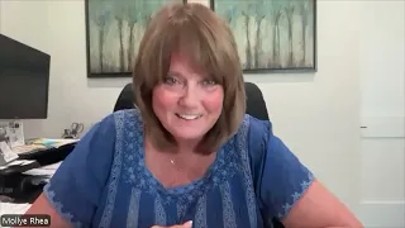
Few people have watched that evolution as closely as Mollye Rhea, Founder and President of For Momentum, who has spent decades helping brands and nonprofits work together to create social impact.
Her latest Best in Class Cause Marketing Campaigns 2026 research looks closely at more than 100 nonprofit organizations and asks experienced practitioners to identify their most successful cause partnership—and then explain what made it work.
The result isn’t simply a collection of benchmarks. It’s a picture of how cause marketing itself is changing.
60-second highlight: “From Campaign to Collaboration”
From Fundraising to Something Larger
Mollye Rhea remembers when cause marketing was much more straightforward.
“In the beginning, it was a fundraising strategy,” she says, pointing to the familiar model of a company donating a portion of sales to a nonprofit.
Today, she sees a considerably broader role.
Companies increasingly recognize these partnerships as part of their marketing activities—not only for reaching consumers and customers, but also for engaging current employees and attracting future talent.
That distinction matters. Cause marketing hasn’t stopped being about fundraising. In fact, fundraising remains the biggest impact of Best in Class campaigns according to 59% of the nonprofit practitioners surveyed.
But fundraising is no longer the whole story.
Cause partnerships can also raise awareness of an organization and an issue, enhance the reputation of both partners, engage employees, attract volunteers and build stronger connections with communities.
And accomplishing all of that requires more people around the table.
Collaboration Becomes Essential
One of the most telling findings in For Momentum’s research is who is now involved.
On the nonprofit side, marketing and communications teams participate in 86% of Best in Class campaigns—more than dedicated corporate partnership teams at 79% and even development/fundraising at 76%.
On the corporate side, marketing and communications also ranks first at 84%, followed by CSR/community relations and senior leadership.
She finds the nonprofit numbers particularly significant because responsibility for these partnerships has traditionally lived within development and fundraising.
Today, successful execution requires those teams to bring in their marketing colleagues.
“If they don’t consider carefully in the planning process how they’re going to bring in their marketing colleagues, they’re missing the boat,” she says.
The same principle applies to companies.
Rather than treating a cause partnership as an isolated initiative, organizations have an opportunity to consider how the investment can contribute across multiple corporate objectives.
That requires internal collaboration before the partners even begin collaborating with each other.
Employees Change the Equation
One of the clearest examples is employee engagement.
Companies are increasingly considering not only which causes matter to consumers, but which matter to the people they employ—and the people they hope to employ in the future.
Mollye Rhea emphasizes that companies are closely examining nonprofit missions through the lens of attracting and retaining talent, including younger generations entering the workforce.
Once employees join an organization, participation in a cause can deepen that connection. Employees may join a walk team, volunteer, participate in an employee group or engage directly with a nonprofit partner.
That creates value in both directions.
Employees gain a greater sense of belonging and connection to their company. Nonprofits gain awareness, volunteers, donors and advocates.
“External and internal audiences are now both important factors in the planning of these Best in Class partnerships,” Rhea says.
The research reinforces the point. After corporate and nonprofit owned media, employee engagement ranks as the third most commonly used activation strategy, cited by 58% of respondents.
When a Campaign Stops Behaving Like a Campaign
Perhaps the most interesting evolution involves time.
Cause marketing still uses the language of campaigns. Increasingly, however, the strongest examples don’t behave much like conventional campaigns at all.
Nearly a third of Best in Class Cause Campaigns are now year-round, always-on initiatives, compared with 24% in For Momentum’s 2020 study.
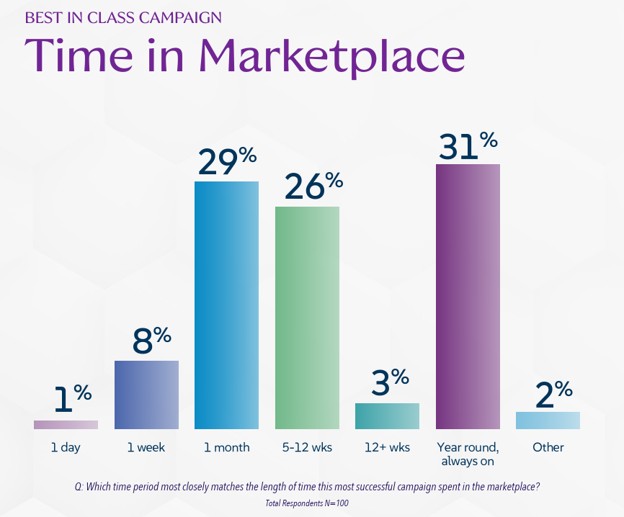
For Mollye Rhea, that’s a meaningful change.
Organizations have moved from putting a temporary spotlight on a cause to maintaining the relationship throughout the year—and continually finding new ways to activate it.
The larger numbers make the point even more dramatically:
6.5 YEARS
Average lifespan of the Best in Class Cause Campaigns studied
$9.6 MILLION
Average lifetime funds raised by the campaigns studied
Those kinds of results don’t happen through a one-month promotion.
“These really are much more integrated, long-term, and they evolve,” she says. “They look at the activations and they add on more things each year.”
Longevity also creates a new challenge: keeping a partnership fresh. In fact, maintaining freshness over several years ranks as the biggest challenge identified in the research.
Perhaps that’s another sign of the discipline’s maturity. The question is no longer simply how to launch a successful cause campaign. It’s how to keep building one.
From One-Off to Bigger Picture
Owned media offers another clue about where cause marketing is heading.
When For Momentum asked how Best in Class campaigns are activated, the most common answer was the company’s owned media, followed closely by the nonprofit’s owned media. Employee engagement came next.
Mollye Rhea describes those findings as evidence that cause marketing increasingly belongs within an organization’s “bigger picture and not just a standalone one-off.”
That may be one of the most important ideas in the research.
The evolution of cause marketing isn’t simply about adding more tactics. It’s about recognizing more connections.
Between fundraising and marketing.
Between companies and nonprofits.
Between consumers and employees.
Between short-term activation and long-term commitment.
And between what an organization wants to accomplish for itself and what it hopes to accomplish in the world around it.
For Rhea, the practical lesson is straightforward: start by breaking down the internal silos.
Nonprofits need development, partnership and marketing teams working together. Companies need to understand the different ways a cause investment can contribute to their objectives. And both sides need to bring those ambitions to the partnership table if they hope to maximize what they can accomplish together.
Cause marketing may have begun with a relatively simple transaction: buy something, give something.
Its most successful practitioners are demonstrating something considerably more ambitious today.
They’re building relationships in which companies, nonprofits, employees and communities participate—and where value isn’t simply transferred from one organization to another.
It’s created together.