How Marketing Makes a Meaningful Difference
The 2026 Marketing Makes a World of Difference™ winners suggest that marketing’s contribution may be expanding—from communicating value to helping create it.
Each year, The Internationalist’s Marketing Makes a World of Difference™ Awards look for work that meets a deceptively simple test: Something meaningful happened because marketing got involved.
That means looking beyond awareness, engagement, and even commercial success alone. The question is not simply whether the marketing worked, but what became meaningfully different because marketing got involved—a behavior, an experience, a decision, a service, an opportunity, a system, or an outcome.
Looking across the 2026 winners, something else becomes apparent.
The most interesting work isn’t confined to what has traditionally been called “purpose marketing.” Nor does it represent a retreat from marketing’s responsibility to build brands and businesses. Many of these initiatives produced significant commercial results.
Instead, the work suggests something larger: Marketing may be moving from communicating value to becoming one of the ways value gets created.
When the message becomes the mechanism
For most of marketing history, media has been the means by which an idea travels. Increasingly, some marketers are asking what else that infrastructure can do.
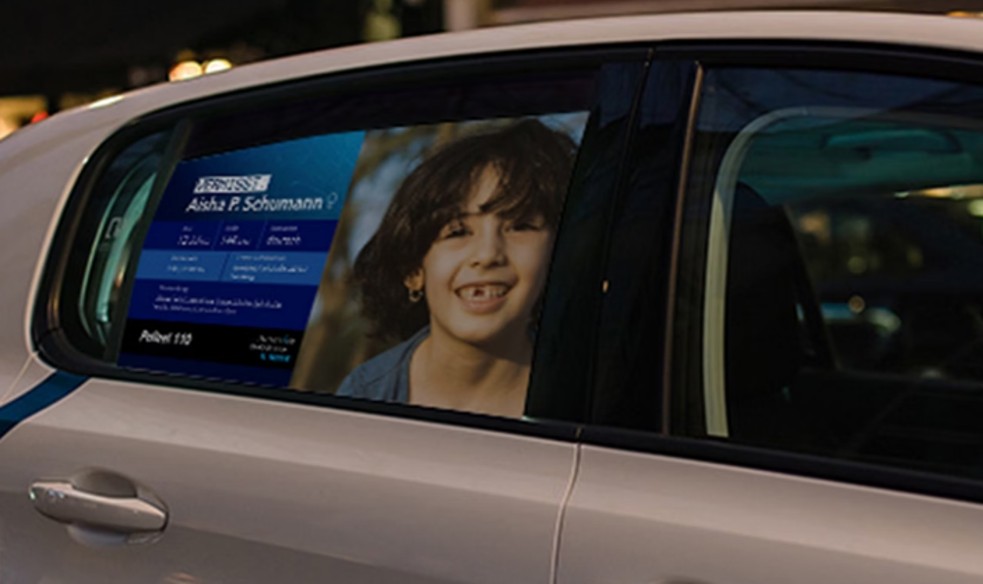
Initiative Vermisste Kinder & Free2move — Screen2Save offers an unusually literal answer. Connected vehicle screens, retail media, and social platforms became part of a real-time network for distributing police-confirmed missing-child alerts. The media didn’t simply tell people about a problem. The media became part of the response.
Sapeurs-Pompiers de France (Firefighters of France)— FireCatchers approached the same idea from another direction. The familiar “Starting Soon” screens seen by people waiting for Twitch streams became live wildfire surveillance feeds. Streamers and their audiences weren’t simply asked to care about wildfire detection; they became participants in it.
And Huggies’ Sound of a Hug took something far more intimate—a brand belief in the comfort of a parent’s heartbeat—and turned it into a personalized tool parents could actually use.
The scale and subjects are very different. The underlying shift is not.
The idea is no longer always something the marketing communicates. Sometimes the marketing is how the idea works.
SEE THE EVIDENCE → Explore all 2026 Marketing Makes a World of Difference™ winners and case studies.
Attention isn’t the same as action
Marketing has become extraordinarily sophisticated at measuring attention. We know whether people saw something, clicked something, watched something, shared something, or talked about something. Those measures matter.
But when the ambition is to make a meaningful difference, behavior presents a harder test.
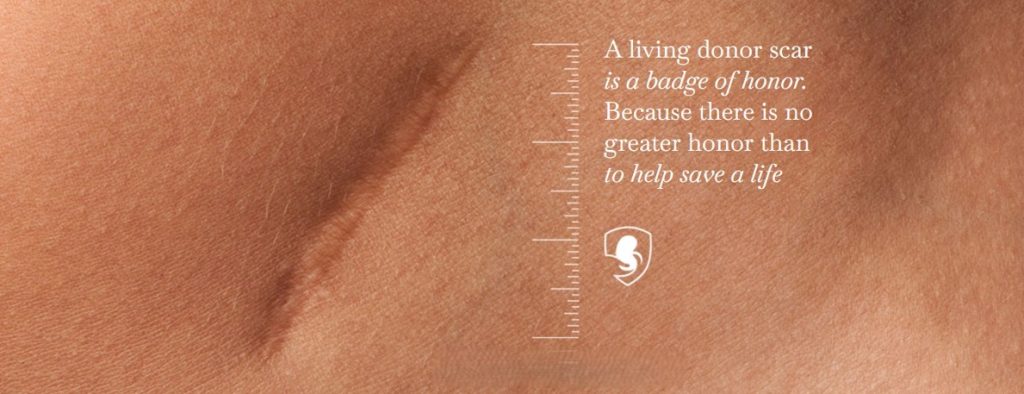
Sanofi’s Badge of Honor didn’t stop at reframing the scar left by living kidney donation as a symbol of generosity. It created a clearer path toward action—and during its Houston pilot, applications to become a living kidney donor rose from one in the previous twelve months to 85 in four months.
Decathlon used Black Friday not to manufacture another reason to shop, but to help people make room in their own calendars for sport. ISDIN made invisible UV exposure visible to children through temporary tattoos. Vodafone, remarkably for a technology company, encouraged people to put their devices down and reconnect with life beyond the screen.
None of these behaviors is identical. Nor should it be.
What they share is a willingness to ask more of marketing than a change in perception.
What did someone actually do differently because marketing was there?
Participation becomes more consequential
“Engagement” has been one of marketing’s favorite words for years. Often it means getting people to participate in the marketing itself: comment, post, share, vote, upload, react.
But another form of participation is emerging.
Instead of asking, How do we get people to engage with this campaign?, the more interesting question may be, What can marketing enable people to participate in?
FireCatchers turned Twitch audiences into additional eyes watching for wildfire smoke. Make-A-Wish UK used the communal culture of gaming to generate financial support for children’s wishes.
An Austrian electrical-industry initiative, through the Redstone Challenge, entered Minecraft to help teenagers discover that abilities they already valued in a virtual world might translate into skills for a real-world profession.
American Express went beyond sponsoring emerging music to create opportunities for unsigned artists while investing in the grassroots venues upon which the music ecosystem depends.
Knorr approached participation through a more everyday behavior, using the language of modern dating to turn cooking skills into a new signal of compatibility for Gen Z.
In each case, participation extends beyond the marketing itself. That distinction matters.
Marketing becomes less about generating engagement as an end result and more about creating an invitation to do something that has value beyond the campaign.
Utility may be becoming an expression of brand
Brands have spent decades defining what they stand for. Some of the more interesting work now asks a tougher question: What can a brand make easier, better, or more possible because of what it stands for?
For Huggies, a promise about comfort became a usable experience for parents. Cesar’s belief that life is better with dogs extended into tools, guides, and partnerships designed to make dog-friendly travel easier to discover and plan. Nestlé Infant Nutrition combined AI with human insight to make guidance more relevant at moments when new mothers were actively seeking answers.
Zurich took a different route, using an immersive sensory experience to make the often-invisible loss of smell tangible through its connections to memory and emotion.
These initiatives don’t abandon communication. They add another dimension to it.
Don’t just tell me what your brand believes. Do something useful because of it.
That may become an increasingly powerful definition of brand experience.
Purpose gets more interesting when it changes a decision
Purpose has had a complicated decade in marketing.
At its weakest, it became another communications layer: a statement about what an organization believed, attached to a campaign designed to demonstrate that belief.
But purpose becomes considerably more consequential when it influences a decision.
DNA Vibe’s work in Ukraine offers an especially clear example. Rather than simply donating finished therapeutic devices from elsewhere, the company developed a local assembly model designed to build manufacturing capability, employment and access within Ukraine itself.
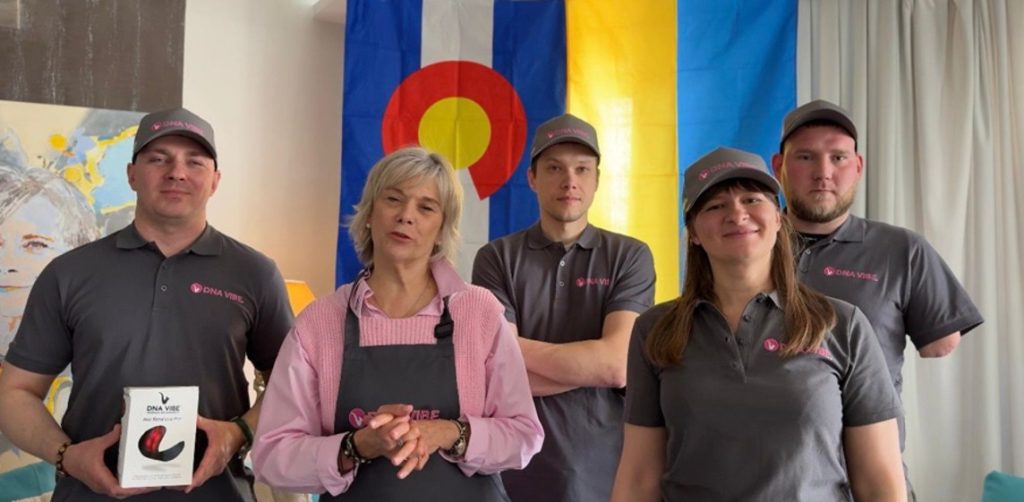
The meaningful action wasn’t added around the edges of the business. It influenced how the business chose to operate.
There are echoes of that thinking elsewhere. Vodafone was willing to challenge the very screen behavior upon which its category depends. American Express invested not only in performers but in the physical infrastructure that allows emerging music to flourish. Decathlon sacrificed the conventional language of Black Friday discounting to make a different proposition about the value of people’s time.
Perhaps the question of purpose is becoming less What does the brand say it believes? and more What decision did that belief cause the organization to make?
From communication to consequence
None of this means that marketing’s traditional responsibilities have disappeared.
Brands still need to grow. Products still need to sell. Customers still need to choose. Businesses still need marketing to create demand and commercial value.
What may be changing is the assumption that marketing’s contribution ends there.
Across this year’s work, a loose progression begins to appear.
- Marketing notices. It identifies a human tension, unmet need, or overlooked possibility.
- Marketing connects. It brings together audiences, technology, media, partners or capabilities that might otherwise remain separate.
- Marketing enables. It gives people something useful to do, use, experience or participate in.
- Marketing changes behavior. Attention becomes action.
And sometimes:
Marketing changes what happens.
A missing-child alert reaches millions of people through screens that once carried advertising. A livestream audience watches for wildfires. Someone applies to become a kidney donor. A teenager recognizes a possible future profession. A parent gains another way to comfort a baby. A company changes how and where something gets made.
Perhaps that is the quiet evolution worth watching.
The future of meaningful marketing may not depend upon finding ever more compelling ways to tell people what a brand stands for. It may depend upon finding more ways to make those beliefs consequential.
And that leaves marketers with a question considerably larger than whether the campaign worked: What became possible because marketing was there?
The 2026 Marketing Makes a World of Difference™ winners offer 16 very different answers.
SEE THE EVIDENCE → Explore the 2026 Marketing Makes a World of Difference™ winners and case studies.