Why Some of Advertising’s Oldest Real Estate Suddenly Feels Surprisingly New
Out-of-home advertising has been refusing to stay politely inside the rectangle for a very long time.
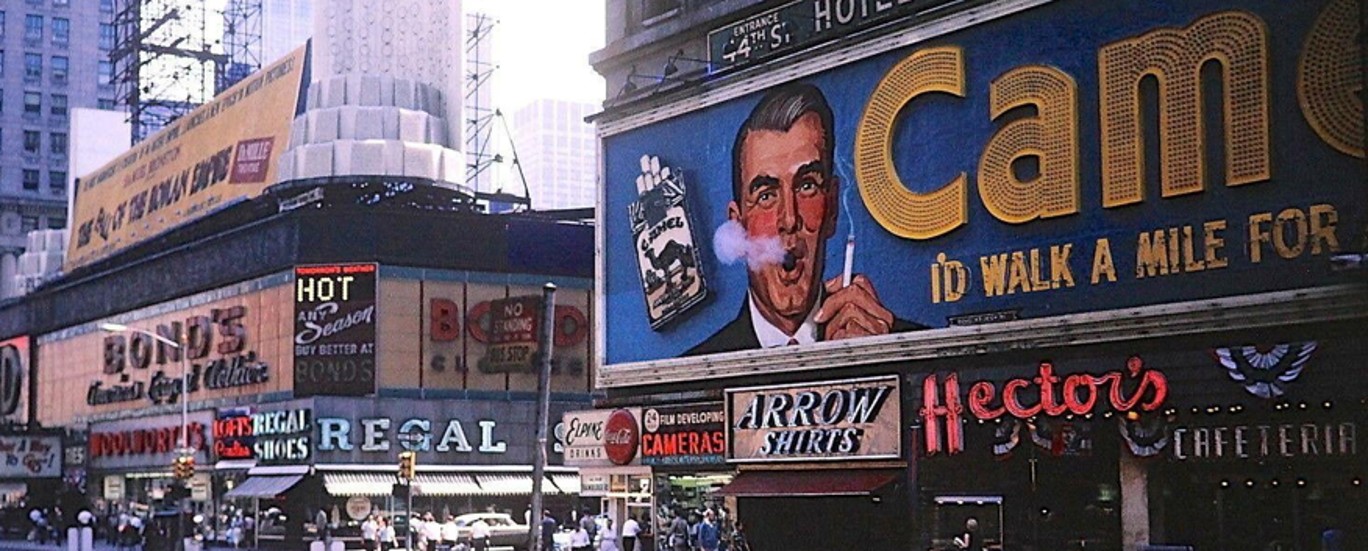
In mid-century Times Square, the famous Camel billboard blew actual smoke over Manhattan. Maxwell House poured an endless cup of coffee. Signs flashed, moved, and became part of New York City’s visual identity.
So spectacle isn’t new. Neither is ingenuity. What does feel new is how interesting some of advertising’s oldest real estate suddenly seems again.
Perhaps that’s because the competition for our attention has changed so dramatically. We carry an extraordinarily compelling piece of media everywhere we go. Our feeds are personalized. Our recommendations are individualized. Our screens can conjure virtually anything—and AI is rapidly expanding what’s possible still further.
Yet lately, some of the advertising making me look twice is doing something surprisingly simple. It’s making me notice what’s happening in the world around us.
And it’s doing so in remarkably different ways.
When the world completes the ad
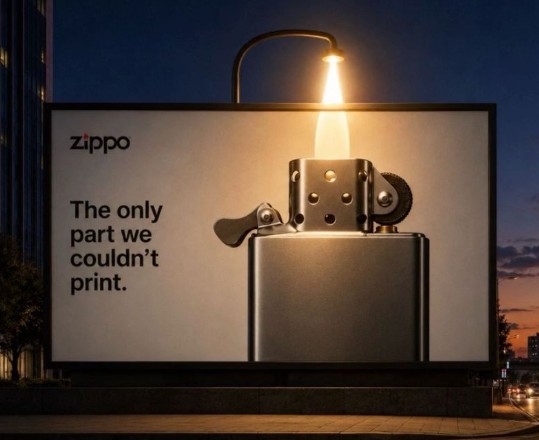
Take Zippo.
An enormous lighter sits open beneath a streetlamp. The lamp’s beam becomes its flame.
The copy reads: “The only part we couldn’t print.”
That’s it.
No animation. No complicated installation. No demand that we admire the technology.
The streetlamp was already there.
Someone simply saw it differently.
That may be one of the particular pleasures of great outdoor advertising. It doesn’t always create another world for us to enter. Sometimes it notices something interesting about the world we’re already in.
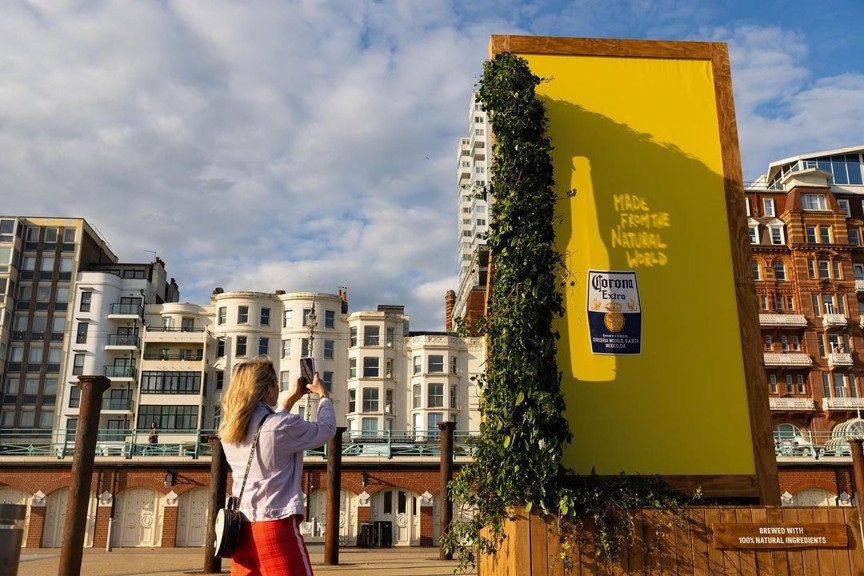
Corona took that thought somewhere else.
Its Natural Billboard in Brighton, England used real greenery and precisely calculated sunlight so that, at the right moment, shadow formed the silhouette of a Corona bottle across the board. The sun effectively finished the advertisement.
It’s a wonderfully appropriate idea for a brand talking about natural ingredients.
But what’s especially satisfying is the relationship between idea and place. Remove the sun, the greenery or that particular physical setting and you haven’t merely moved the ad.
You’ve broken the idea.
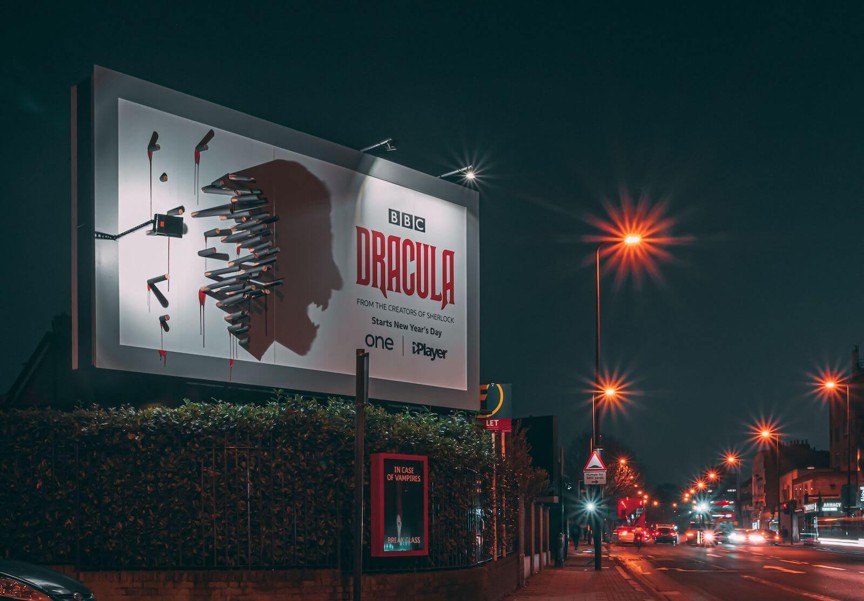
BBC’s Dracula played with the same relationship between advertising and its surroundings more ominously. What appeared during the day as a collection of stakes became something entirely different after dark, when their shadows formed the unmistakable profile of Dracula.
Once again, the billboard alone wasn’t the whole idea. Time, light and place completed it.
The medium didn’t simply occupy the environment. The environment became part of the creative.
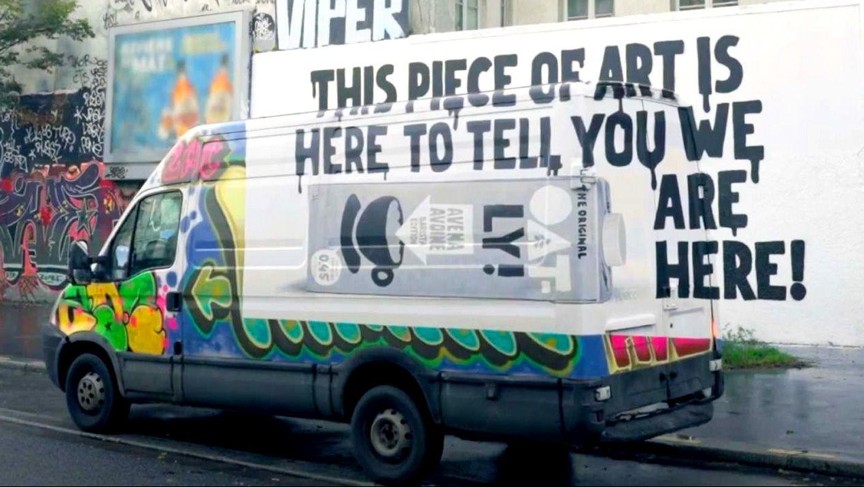
Oatly played with context differently in Paris, using restrictions around outdoor advertising as part of the creative challenge. Messages and physical objects worked together so that the environment—and the rules governing it—became part of the joke.
Again, we have to notice what’s happening. We get it.
For a second, we’re part of completing the thought.
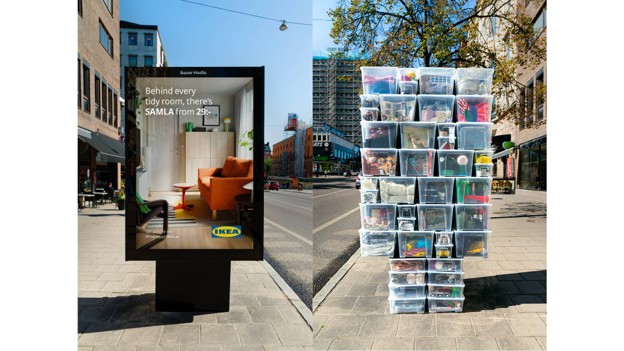
IKEA Sweden recently found another opportunity in something most advertisers would probably ignore: the back of the billboard.
Its new Tidy Billboards, created with Åkestam Holst NoA, look like conventional IKEA home-furnishing ads from the front. Walk around them and the idea reveals itself: household clutter packed into IKEA’s SAMLA storage boxes.
The mess hasn’t disappeared. It’s simply been put away.
Even the part of the billboard we’re not supposed to look at became part of the idea.
When the billboard becomes the proof
But what if we don’t merely look at the advertising?
What if we’re invited to test it?
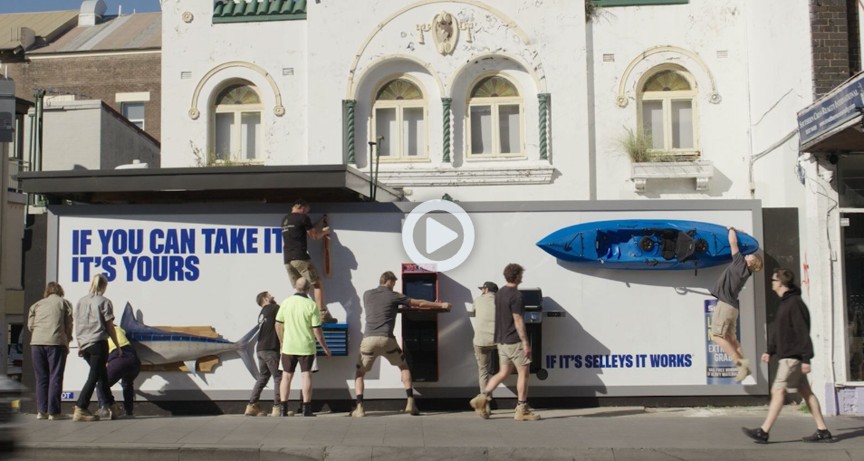
Australian adhesive brand Selleys recently turned an ordinary billboard into what might be called a very public product demonstration.
A kayak, arcade machine, toolbox, cricket bat and even a 2.8-metre marlin were glued directly to the board using Liquid Nails. The invitation: “If you can take it, it’s yours.”
People tried. Builders tried. Influencers tried. Even Australia’s second-strongest man tried.
Nothing came off.
And suddenly the billboard wasn’t merely making a claim about the product.
It was proving it.
The physical medium mattered because the physical reality of the product mattered. Instead of asking people to believe an assertion about adhesive strength, Selleys invited them to disprove it.
Seeing became believing. Trying became proof. And the audience became part of the demonstration.
When the ad leaves the ad
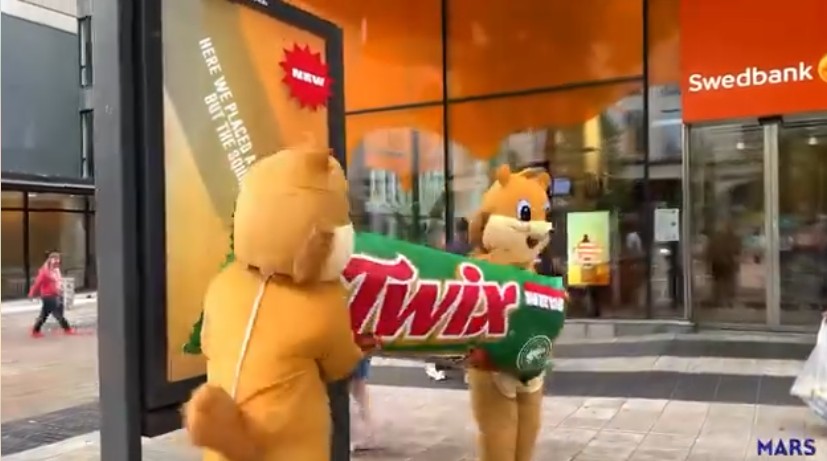
Then, in late August, Sweden offered another variation.
To introduce Twix Hazelnut, an outdoor installation in Stockholm showed a giant squirrel reaching for an oversized bar.
Then two life-sized squirrels “stole” it.
They removed the XXL Twix from the advertising site, leaving an empty space behind, and carried it through Stockholm’s streets, shopping areas and metro system.
It’s silly. And rather wonderful. Because the advertising has seemingly escaped its assigned media space. The billboard begins the story. The city continues it.
People encounter the squirrels elsewhere. The product moves through the same streets and stations they do. What began as outdoor media becomes something closer to public theater.
Of course, photographs and videos extend all of this online.
But perhaps “shareability” is too easy an explanation for why these ideas work.
The social post is the record.
The thing people want to share happened somewhere first.
And sometimes the advertising doesn’t need an advertising site at all.
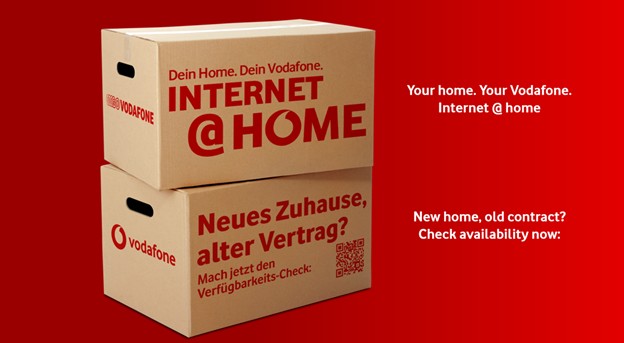
In Germany, Weischer.OOH x Promodoro turned an ordinary moving box into media for Vodafone.
People preparing to move could order six free Vodafone boxes. Useful in the moment, they also became mobile billboards as they traveled from one home to another—with a QR code connecting people directly to Vodafone.
The clever part isn’t that someone put advertising on a box.
It’s recognizing that the box was already going exactly where Vodafone wanted to be.
Even a box can become a medium.
This instinct isn’t new
It’s worth remembering that context-aware, responsive and participatory outdoor didn’t suddenly arrive in 2026.
In 2015, The Internationalist awarded Gold in our Media Innovation Awards to Réno-Dépôt’s Sky Swatches, which detected the actual color of the changing Canadian sky and matched it in real time to a SICO paint shade. It was also a contender for our Grand Prix.
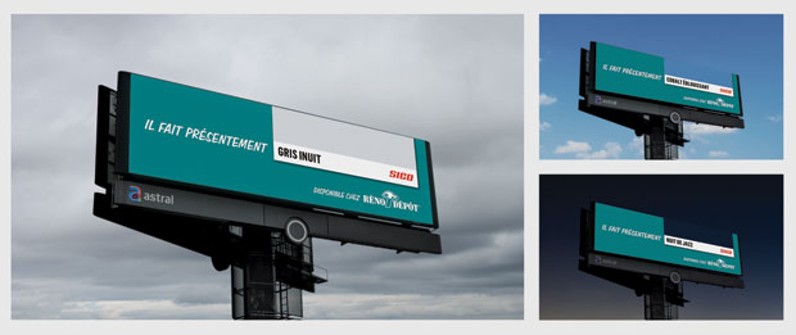
Sophisticated technology produced a wonderfully human result: Look at the sky.
See a color you might want to bring home.
Another Internationalist-recognized campaign, Look at Me. We Can Stop It, made attention itself consequential. As passersby looked at the image of a bruised woman, her injuries began to disappear.
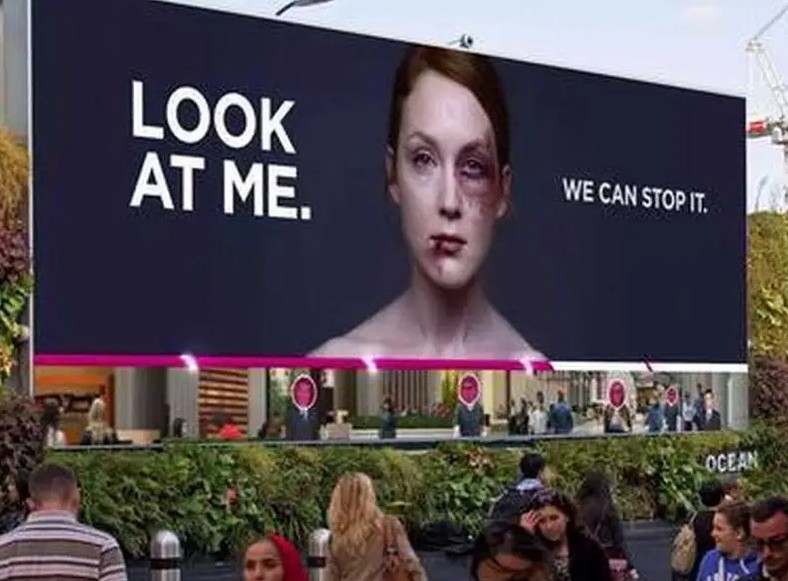
The interaction wasn’t an embellishment. It embodied the message.
Which is an important corrective to any temptation to declare today’s outdoor creativity a new phenomenon. It isn’t.
So perhaps the better question is: Why does it feel newly interesting now?
When an advertisement becomes somewhere to go
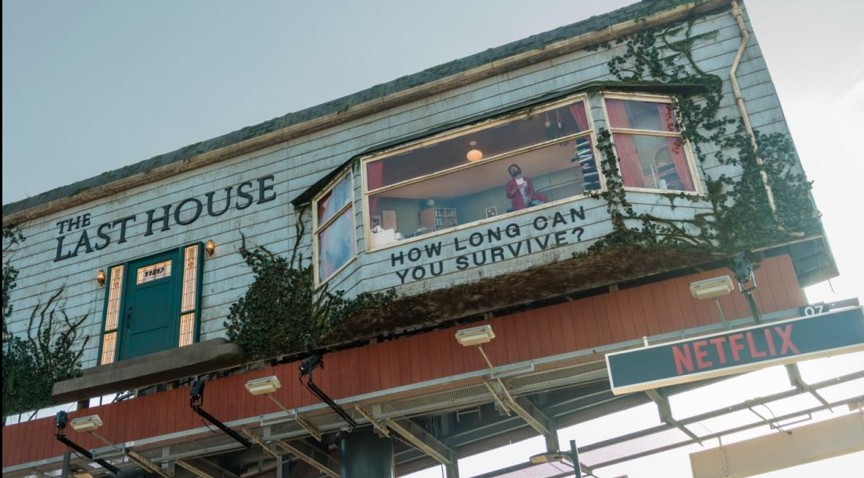
Netflix recently pushed physical presence further on Sunset Boulevard, constructing a furnished room high above the street and putting an actual person inside it. People could watch him eat, read, exercise, and inhabit this strange space above Los Angeles.
Some didn’t merely happen to see the advertisement. They went to see it. Think about that progression:
- An ad we see.
- An ad we notice.
- An ad we experience.
- An ad we seek out.
The billboard has become a destination.
And once again, its online life comes after its physical one.
When less makes us look
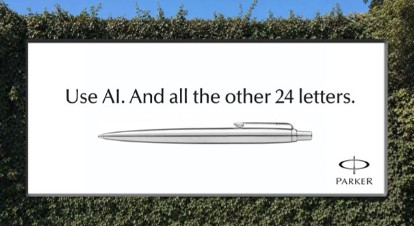
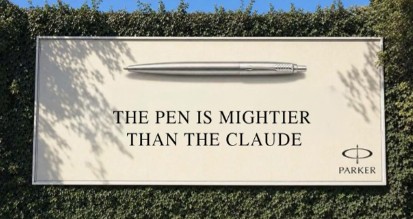
And then there are two Parker advertisements that do almost nothing. (Which may be why I love them.) A pen. White space. A few words.
“Use AI. And all the other 24 letters.”
And: “The pen is mightier than the Claude.”
No stunt. No interactivity. No giant squirrel.
At the precise moment when marketers possess more tools than ever to animate, personalize, generate, optimize and astonish, someone chooses to do almost nothing.
That’s not a failure of imagination. It’s restraint.
And restraint can become especially conspicuous in a world of excess.
Perhaps innovation isn’t always about making a medium do more.
Sometimes it’s knowing how little it needs to do.
When the line between real and imagined starts to blur
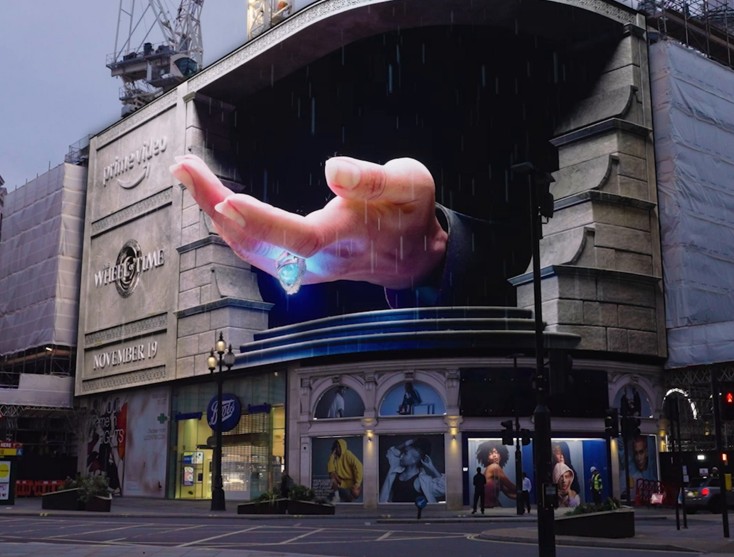
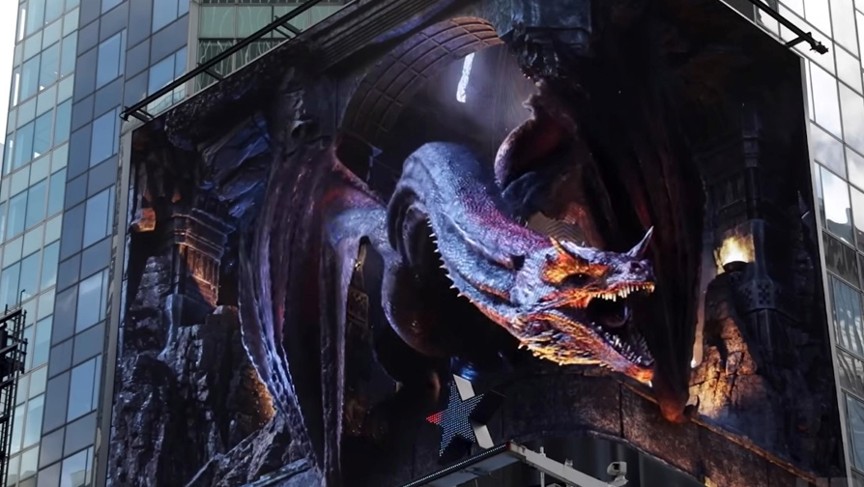
Of course, restraint isn’t the only answer.
Today’s digital screens can create the illusion that advertising has broken free of the surface itself.
At Piccadilly Circus, an enormous hand appears to reach out from the screen and into the space above the street to promote The Wheel of Time for Amazon Prime Video. In Times Square, a dragon seems to emerge from the architecture itself on behalf of HBO’s House of the Dragon.
Neither has actually left the screen.
But that’s precisely what our eyes tell us is happening.
And then advertising can go one step further.

When I spoke with SuperHeroes founder Rogier Vijverberg—twice, because I found the work so intriguing—he described an emerging form of digital street art designed to make people question what they’re seeing.
For Netflix, SuperHeroes placed Appa, the enormous flying bison from Avatar: The Last Airbender, across a freeway, apparently bringing traffic to a halt.
Except, of course, Appa wasn’t there.
Unlike the hand or dragon, this wasn’t an illusion being experienced by people standing in front of a giant digital screen. The real-world setting and CGI came together on the screen in our hands.
And that creates an interesting inversion.
Earlier examples in this story use the physical world to complete the advertising.
Here, advertising uses the physical world to make the imaginary seem real.
The street becomes the canvas—even when the finished experience exists digitally.
Decades ago, a man on a Camel billboard blew actual smoke into Times Square.
Today, a giant hand appears to reach into Piccadilly Circus, an imaginary dragon seems to escape into Manhattan—and a flying bison that was never there can apparently stop traffic.
The technology has changed beyond recognition.
The human ambition hasn’t: Make people stop and look.
Perhaps what’s new is us
There isn’t one new technique transforming outdoor advertising.
That’s what makes these examples interesting.
- One uses a streetlamp.
- Another uses sunlight.
- Another finds an idea on the back of the billboard.
- Another turns a billboard into a product test.
- Another sends squirrels carrying the advertising through Stockholm.
- Another turns an ordinary moving box into media.
- One puts a person inside the media.
- Another gives us a pen and a few clever words.
- And still others use extraordinary technology to blur the boundary between the physical and imagined worlds.
Context. Proof. Participation. Physicality. Wit. Restraint. Spectacle.
Different answers to one very old problem: How do you make someone look?
But there is one important difference between Camel’s Times Square and ours.
Today, the billboard isn’t merely competing with the other signs, storefronts, traffic and people around it. It’s competing with the extraordinarily compelling screen in our hand.
Much of contemporary media has become very good at creating a world specifically for me.
- My feed.
- My recommendations.
- My algorithm.
- My screen.
And perhaps that’s what makes the contrast so interesting.
Most of the advertising we’ve looked at here encounters us in a world we share.
That doesn’t make physical media inherently better than digital media. In fact, the Piccadilly hand and Times Square dragon are sophisticated digital illusions.
But those illusions are encountered in public. I can point. You can turn around. We can both see them.
Appa turns the idea inside out. The street is still the stage, but the impossible encounter happens on the screen in our hands.
Either way, the creative idea depends on our relationship with the world around us.
And perhaps that is one reason some of advertising’s oldest real estate suddenly feels surprisingly new. At a moment when technology makes almost anything possible, there may be renewed creative power in giving us a reason to notice something happening in the world we’re already in—or making us look at that world differently.
Sometimes that’s sunlight.
Sometimes it’s a streetlamp.
Sometimes it’s two squirrels running away with a chocolate bar.
And sometimes it’s something impossible that makes us wonder, even for a second, whether it might actually be there.
Whatever the technique, the achievement is surprisingly human.
For a moment, something made us look.