
Creator Marketing Enters Its Next Phase
As investment grows, the conversation is shifting from authenticity alone to creativity, effectiveness and professional standards.
For more than a decade, creator marketing has been one of marketing’s fastest-evolving disciplines. New platforms emerged, creators built loyal communities, brands experimented with new forms of storytelling, and investment grew at an extraordinary pace.
Today, creator marketing has become a mainstream component of the marketing mix. Global brands are committing larger budgets, measurement is becoming more sophisticated, and campaigns increasingly sit alongside every other major marketing discipline.
As that evolution continues, however, the conversation itself appears to be changing.
Increasingly, marketers are asking the same questions they ask of every established discipline. How should success be measured? What standards matter? How do brands balance creativity with accountability? And what capabilities will distinguish the agencies and creators best prepared for the future?
The recent launch of the European Association of Communications Agencies’ Influencer Marketing Agency Council (IMAC) offers an opportunity to explore those questions. Rather than viewing the Council simply as an organizational announcement, it also reflects a broader moment in the evolution of creator marketing.
To better understand what this next phase may look like, The Internationalist spoke with Charley Stoney, CEO of EACA, and Thomas Angerer, Co-founder and Chief Creative Officer of BeInfluence Europe and Chair of the new Council.
From Fast-Growing Channel to Marketing Discipline
According to Charley Stoney, the timing reflects how significantly creator marketing has evolved.

“Creators are becoming mainstream, budgets are increasing and measurement is improving,” she explains. “Major brands including L’Oréal and Heineken are using content creators extensively and putting measurement frameworks in place that assess their effectiveness.”
That growing importance is also reflected in recent Effie Europe results. Analysis by Kantar shows that while none of the winning campaigns in 2023 relied primarily on creators, by 2025 creator-led campaigns accounted for 13 percent of winners, with two-thirds of winning campaigns incorporating influencers somewhere within the communications mix.
For Charley Stoney, these developments naturally bring greater expectations.
“In this environment,” she says, “it’s important that we build a regulatory and ethical framework for the discipline.”
The creation of IMAC, she believes, sends an important signal that creator marketing has become an established marketing capability—one that increasingly wishes to be recognized alongside more traditional communications disciplines while embracing the same professional standards and self-regulatory principles.
The Council also intends to contribute original research on the sector over the coming year, helping marketers better understand how creator marketing continues to evolve across Europe.
Rethinking the Authenticity Conversation
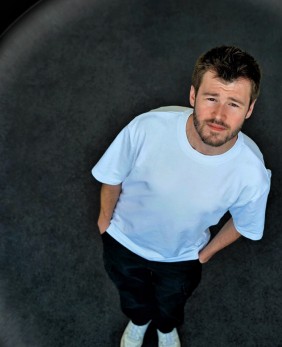
Perhaps the most provocative observation comes from Thomas Angerer.
I think we should retire the word ‘authenticity’ altogether.
It’s an unexpected statement from someone whose career has been built in creator marketing.
Yet Thomas Angerer isn’t dismissing what originally made creator marketing successful. Rather, he believes the industry has become too dependent on a term that no longer distinguishes great work.
“When every brief demands authenticity, every pitch promises it and every case study claims it,” he observes, “the word begins to lose its meaning.”
Consumers, he argues, are more sophisticated than marketers sometimes assume. They already understand that creators are often working with brands.
“Disclosure isn’t a threat to some fragile magic,” he says. “It’s simply the baseline of a professional discipline—and the reason creator marketing can remain both effective and trustworthy.”
Instead of focusing primarily on authenticity, Angerer believes creator marketing’s future will increasingly rest on three foundations.
Creativity. Effectiveness. Operational Excellence.
The first remains creativity.
Creator marketing’s greatest strength has never simply been appearing “real.” It has been the ability of talented creators to tell compelling stories, earn attention and participate naturally within culture.
The second is effectiveness.
As budgets increase, so do expectations.
Business outcomes, measurement and demonstrable impact become increasingly important as creator marketing competes for larger investments alongside every other communications discipline.
The third is operational excellence.
Managing creator campaigns across multiple countries now requires sophisticated approaches to contracts, usage rights, legal compliance, brand safety and governance.
Rather than viewing these as constraints, Angerer sees them as enablers.
“Clear guardrails,” he says, “are precisely what allow creative work to be braver.”
He summarizes the transition succinctly:
Professionalisation won’t kill what made this channel successful. It will allow it to compete for—and deserve—the biggest budgets in marketing.
Building Trust Through Professional Standards
One practical focus of the Council is encouraging greater participation in ethical training for creators.
Research from the European Advertising Standards Alliance (EASA) shows that approximately 22 percent of complaints concerning online advertising relate to influencer marketing, with disclosure issues representing a significant proportion.
Training appears capable of making a measurable difference.
A recent Dutch study examining more than 1,300 creator posts found that compliance with advertising standards increased from 25 percent before certification to 60 percent following training.
For Charley Stoney, these findings reinforce a broader principle.
As creator marketing becomes a larger and more influential part of the communications industry, responsible practices become increasingly important—not only for agencies and creators, but also for the brands that place growing trust in the channel.
The Signal
The launch of IMAC may appear, at first glance, to be another industry announcement.
Viewed more broadly, however, it reflects something larger.
Creator marketing appears to be entering the same stage experienced by many successful marketing disciplines. As influence grows, expectations grow alongside it. Experimentation gives way to professionalization. Creativity becomes paired with measurement. Innovation is strengthened by governance. Trust becomes every bit as important as reach.
This pattern is becoming increasingly visible across marketing today—from AI governance and retail media measurement to sustainability reporting and now creator marketing.
The next phase of creator marketing is not about becoming less creative.
It is about becoming more accountable.
And perhaps that is one of the clearest signals yet that creator marketing has become not simply an emerging channel—but an established marketing discipline.