
TRENDSETTERS | Michael Fanuele on the Crisis of Inspiration
Organizations today have more information than ever before.
Research is richer. Data is more accessible. Measurement is more sophisticated. Artificial intelligence can summarize, predict, analyze, and optimize at a scale that would have seemed unimaginable just a few years ago.
Yet despite all this intelligence, many leaders find themselves confronting a surprisingly human challenge.
How do you inspire people to change?
It’s a question Michael Fanuele has spent much of his career exploring.
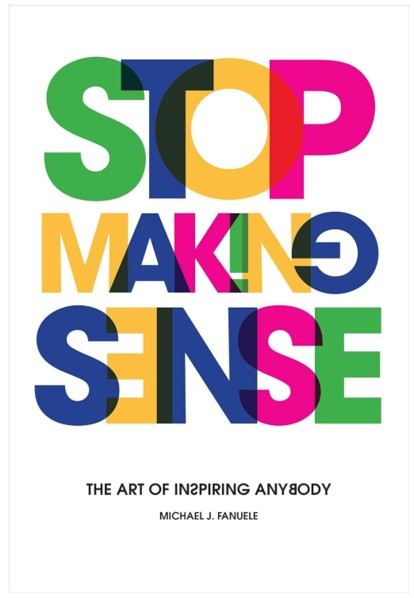
Now Chief Brand Officer of Shake Shack and author of Stop Making Sense: The Art of Inspiring Anybody, Fanuele has built a reputation not simply as a marketer, but as a student of inspiration itself.
His perspective feels particularly timely.
Across industries, organizations are being asked to transform. New technologies, shifting consumer expectations, evolving business models, and increasing pressure for growth have made change a constant reality. Yet many leaders continue to discover that understanding change and embracing change are two very different things.
As Fanuele puts it:
“It’s easy to solve a problem. It’s much harder to tell successful people they have to become more successful.”
Michael Fanuele explores the principles behind inspiration, leadership, and organizational change in his book Stop Making Sense: The Art of Inspiring Anybody. Drawing from business, history, neuroscience, politics, and culture, the book examines how leaders can create belief in possibilities that do not yet exist.
When Success Becomes the Challenge
Most leadership literature focuses on turnaround situations.
A company is struggling.
A category is disrupted.
A business model is failing.
The need for change is obvious.
But what happens when an organization is already successful?
The challenge becomes more nuanced.
People naturally become attached to what has worked. Teams develop habits, systems, and assumptions that have helped create success. The very strengths that built the organization can sometimes make imagining a different future more difficult.
That reality is particularly relevant in periods of growth.
Fanuele’s current role at Shake Shack offers a compelling example. The brand has built a passionate following, a distinctive culture, and a strong reputation. Yet future growth requires employees, partners, and leaders to imagine a version of the company that is significantly larger than the one that exists today.
The challenge isn’t operational.
It’s emotional.
People need more than instructions.
They need a reason to believe.
Why Reason Isn’t Enough
One of the most provocative ideas in Fanuele’s work is the distinction between reason and inspiration.
Modern organizations are built to explain.
Business cases.
Forecasts.
Metrics.
Dashboards.
Presentations.
All are important.
But while reason helps people understand a decision, it doesn’t necessarily help them commit to it.
Inspiration operates differently.
It appeals to aspiration rather than analysis.
Possibility rather than certainty.
Meaning rather than process.
This distinction may help explain why many organizations continue to struggle with change even when the logic behind the change is clear.
People don’t always move because they have been convinced.
Often, they move because they have been inspired.
What Marketing Can Teach Leadership
Interestingly, some of the same dynamics appear in today’s marketing environment.
For years, marketers have become increasingly focused on performance, efficiency, attribution, and optimization. These capabilities have created enormous value.
Yet many brands continue to compete in categories where product quality, convenience, and functionality have become table stakes.
Good products are everywhere.
Choice is abundant.
Consumers can compare, review, and evaluate almost anything.
The challenge increasingly becomes one of preference rather than awareness.
Why do people choose one brand over another?
Why do they spend more?
Why do they care?
Those questions often lead back to the same human dynamics that drive inspiration: identity, belonging, meaning, aspiration, and emotional connection.
In that sense, the challenge facing leaders and the challenge facing brands may not be so different.
The Human Advantage
At a moment when artificial intelligence is reshaping how organizations operate, Michael Fanuele’s perspective feels especially relevant.
Technology can help organizations process information faster than ever before.
But information alone has rarely been enough to create movements.
People still need stories.
They still need belief.
They still need a vision of a future worth pursuing.
Perhaps that is why inspiration matters now.
Not because organizations need less logic.
But because they may need more humanity.
The future may belong to leaders who can do both.