The Future of Marketing Depends on Better Questions, Not Just Faster Answers
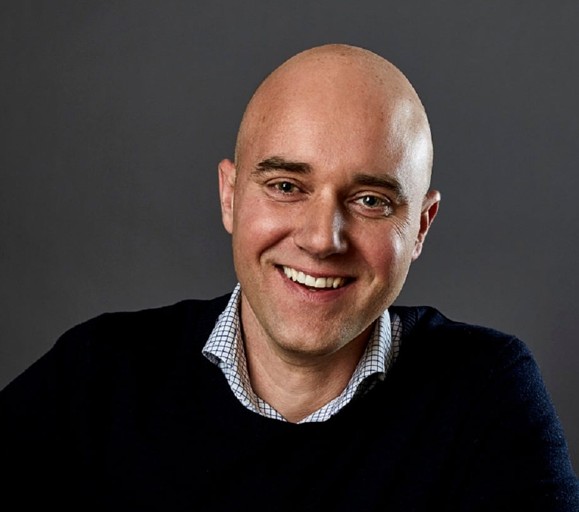
AI & Humanity | Before becoming a technology entrepreneur by founding quantilope, Dr. Peter Aschmoneit spent more than a decade making the same kinds of decisions that today’s CMOs face. His experience as a brand marketer at Unilever, Danone and Fuchs—and his doctorate in marketing—led him to a simple conclusion: the future of AI depends less on generating faster answers than on creating a better understanding of consumers.
Marketing has never had more data.
Or more dashboards.
Or more artificial intelligence promising instant answers.
Ask a question. Generate a report. Summarize a market. Recommend a strategy. In many ways, the mechanics of marketing have never moved faster.
Yet beneath all of this speed lies a more fundamental question.
Do we actually understand consumers—or have we simply become better at recognizing patterns?
It is a question that has quietly shaped the career of Dr. Peter Aschmoneit.
Before becoming the co-founder and CEO of quantilope, Peter spent more than a decade on the client side, building brands and leading marketing organizations at Unilever, Danone and later as Chief Marketing Officer of Fuchs. Along the way, he also earned a doctorate in marketing from the University of St. Gallen, giving him an unusual perspective that combines academic rigor with the practical realities of running a business.
Unlike many technology entrepreneurs, Peter didn’t arrive in marketing from the outside. He lived the pressures that every senior marketer recognizes—launching products, making pricing decisions, repositioning brands and allocating budgets—and often doing so before the research ever arrived.
“There is an important distinction between generating answers and generating understanding.”
The Research Wasn’t Broken
“The methodologies weren’t the problem,” Peter reflects.
Research itself was already remarkably sophisticated. Conjoint analysis, segmentation, MaxDiff and brand tracking had been refined over decades. Yet marketers frequently waited six or eight weeks for answers, only to receive a lengthy presentation after the business had already moved on. Decisions, inevitably, were made anyway—guided by experience, instinct, internal politics, or whatever information happened to be available at the time.
For Peter, the issue wasn’t that the science needed reinventing.
It was that the science needed to reach the people making decisions.
That realization ultimately led him to co-found quantilope—not to simplify research, but to automate much of the expertise that had traditionally remained locked inside specialist teams.
Looking back, however, it becomes clear that Peter never really left marketing.
He simply found another way to improve it.
Better Questions, Not Just Faster Answers
Today, as artificial intelligence reshapes virtually every aspect of business, Peter believes the industry is once again at risk of confusing speed with understanding.
Large language models can summarize reports, synthesize public information and generate plausible recommendations in seconds. But “plausible” is not the same as “true.”
Genuine consumer understanding, he argues, still depends on asking the right questions, designing rigorous research and collecting evidence that reveals why people behave as they do—not simply what existing data appears to suggest.
His concern isn’t that AI will replace marketers.
It’s that organizations may begin trusting AI-generated insights without understanding what those insights are actually built upon.
As Peter puts it:
“Speed without rigor is just faster guessing.”
Consumer Understanding as Infrastructure
One of Peter’s most compelling ideas has little to do with artificial intelligence.
It has to do with how organizations think about consumer insights.
During his years as a marketing leader, research was often commissioned as a project—something purchased when an important decision arose. If he were returning to a CMO role today, one of the first things he would establish would be a continuous feedback loop between consumers and the brand.
“I would treat the insights capability as infrastructure, not as a cost center,” he explains.
It’s a subtle but profound shift.
Rather than treating consumer understanding as an occasional input, Peter believes it should become part of an organization’s operating system—continually informing decisions, strengthening institutional knowledge and providing both human teams and AI systems with evidence grounded in real consumer behavior rather than assumption.
The Next Competitive Advantage
For years, marketers have talked about becoming more data-driven.
Peter suggests the future belongs to organizations that become understanding-driven.
His biggest concern isn’t that AI agents will make marketing decisions.
It’s that they’ll make those decisions using incomplete or poorly grounded consumer understanding.
Organizations that invest now in continuous consumer intelligence—designed with methodological rigor and embedded into everyday decision-making—will give both their people and their AI a stronger foundation.
Those that don’t may find themselves with increasingly sophisticated technology making increasingly confident decisions… in the dark.
Perhaps that’s why Peter still sounds less like a technology CEO than someone who once carried responsibility for brands.
He didn’t leave marketing.
He simply chose another way to improve it.