What the AI for Better Marketing Winners Reveal About Marketing’s Future…
… From Audience Segmentation to Human Understanding…
For decades, marketers have relied on demographics to understand consumers.
Age. Income. Geography. Household composition.
These categories helped brands identify audiences, but they rarely explained what people were actually experiencing.
The winners of The Internationalist’s 2026 AI for Better Marketing Awards suggest that a new model is beginning to emerge.
Rather than focusing primarily on who people are, the strongest applications of artificial intelligence are helping marketers better understand what people are feeling, experiencing, and trying to accomplish.
The shift may seem subtle. In reality, it represents one of the most important changes in marketing in a generation.
SIGNALS OF CHANGE
Consider this year’s winners.
Samsung RMN (Retail Media Network) Upstream used AI to identify emerging needs before consumers actively entered the purchase funnel.
Audi recognized life-stage transitions that often precede vehicle purchases.
Taishin Bank explored how technology could identify signals of diligence and perseverance.
Cathay Pacific focused on moments of hesitation during travel planning.
Amazon Global Selling examined confidence and readiness among entrepreneurs considering international expansion.
Nestlé Infant Nutrition sought to bring clarity to complex parenting decisions.
Shell V-Power used AI to create more personalized and emotionally engaging experiences for Formula One fans.
Stresstabs explored how AI-powered interaction could foster deeper feelings of connection and companionship.
Each initiative addressed a different business challenge. Yet together they point toward a common theme: AI is helping marketers recognize human realities that traditional segmentation models often miss.
FROM TARGETING TO INTERPRETATION
Much of the conversation around artificial intelligence has focused on automation, efficiency, and content generation.
The strongest examples from this year’s awards suggest a different possibility.
AI may prove most valuable when it helps marketers interpret signals that would otherwise remain invisible.
Not simply what people buy. But why.
Not simply where they are. But what they are experiencing.
Not simply who they are. But what they need.
In this sense, AI is becoming less a tool for targeting and more a tool for understanding.
THE RETURN OF HUMANITY
Ironically, the rise of artificial intelligence may be making marketing more human.
Many of this year’s winning initiatives focused on emotions and experiences that have always influenced decision-making: anticipation, confidence, connection, clarity, recognition, and belonging.
These are not machine concepts. They are human ones.
AI simply helped marketers recognize them more effectively and respond more appropriately.
A NEW ROLE FOR MARKETING
Perhaps the most significant insight is that AI appears to be expanding marketing’s role.
Historically, marketing has often been associated with persuasion.
Many of this year’s winners suggest something broader: helping people navigate complexity, reducing uncertainty, building confidence, recognizing effort, and strengthening relationships.
This perspective aligns closely with broader conversations about purpose, participation, and impact that have emerged across marketing over the last decade.
THE NEXT FRONTIER
One additional question surfaced repeatedly throughout this year’s awards.
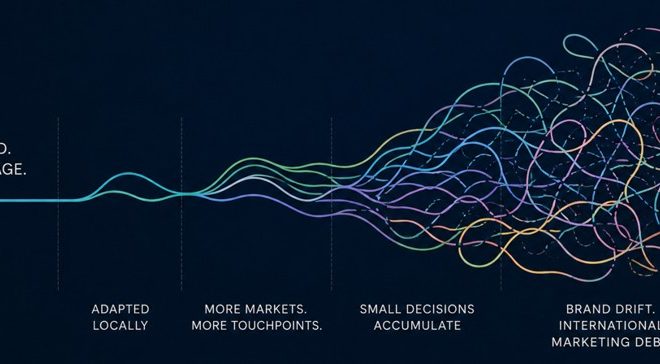
If AI enables organizations to create exponentially more content, how do they ensure that content remains effective?
Zuuvi’s Special Recognition for Creative Infrastructure Innovation highlights an emerging challenge facing marketers around the world: maintaining quality, consistency, and coherence at scale.
As AI transforms creation, new forms of governance and creative stewardship may become equally important.
LOOKING AHEAD
The most effective AI applications are not helping brands find more consumers.
They are helping marketers better understand the emotions, motivations, and circumstances that shape human decisions.
That may ultimately become AI’s greatest contribution to marketing.
Not replacing human understanding. Deepening it.
Further Reading
The insights discussed in this article emerged from The Internationalist’s 2026 AI for Better Marketing Awards, which recognize applications of artificial intelligence that create meaningful value for both brands and consumers.
Explore:
• AI for Better Marketing 2026 Winners
(Complete rankings, winner summaries, and links to individual case studies.)
• The Trends Behind This Year’s Winners
(A closer look at the themes, patterns, and signals that emerged from this year’s winning entries.)