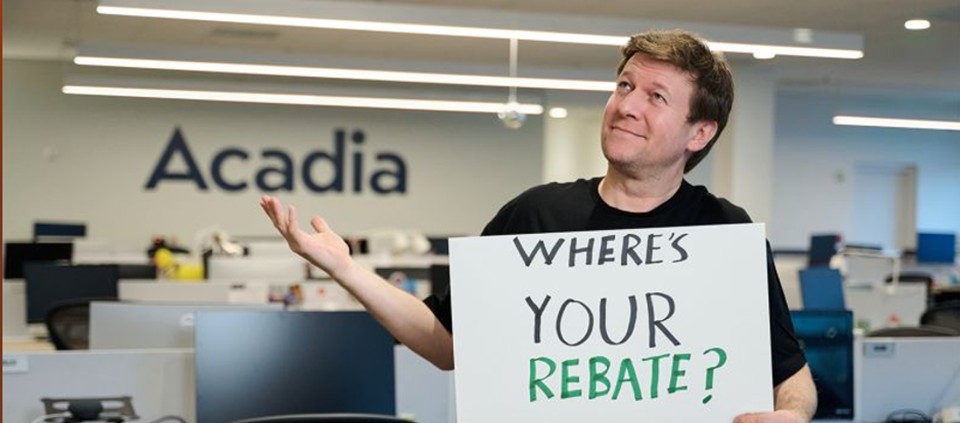
Jared Belsky: Trust, Collaboration—and Why Marketing’s Best Days May Still Be Ahead
When Jared Belsky decided to return media rebates to Acadia’s clients, he knew people would notice.
The decision challenged one of the marketing industry’s least-discussed practices. Instead of keeping rebates earned through media buying as agency profit, Acadia redistributed them to nearly 50 clients based on their share of spending.
“It wasn’t my money in the first place,” Belsky explains. “We had that buying power only because we were representing our clients’ funds.”
At first glance, the story appears to be about media rebates.
It isn’t.
It’s about trust.
“We can’t all bemoan the trust gap that exists between clients and agencies,” he says, “if we’re not willing to do our share.”
That philosophy shaped one of the most thoughtful conversations we’ve had recently on Trendsetters—not simply about agency economics, but about what the next generation of marketing relationships could look like.
Beyond Transparency
Belsky understands why agency economics have become strained.
Over two decades, agencies have been asked to do more work with greater complexity while often receiving less compensation. He acknowledges that frustration.
But he rejects the idea that hidden revenue streams are the answer.
“The antidote,” he says, “is not to create further trust breaches… but to think differently about organizational structure, incentives, and technology.”
At Acadia, that philosophy has led to flatter organizational structures, greater use of AI, and compensation models designed around long-term client success rather than undisclosed profits.
An Unexpected Optimist
What surprised me most during our conversation wasn’t Belsky’s position on rebates.
It was his optimism.
Too often, marketing conversations drift toward nostalgia—toward the belief that the industry’s best years have already passed.
Belsky doesn’t buy it.
“I violently disagree,” he says.
“If you’re a 21-year-old coming into this industry now, there’s so much wonder.”
He points to AI, emerging creative technologies, and the shrinking distance between imagination and execution as reasons to be excited rather than fearful.
Rather than replacing marketers, he believes these tools will allow people to spend less time on repetitive work and more time creating meaningful business impact.
Jared Belsky believes the future of marketing depends less on bigger organizations than on stronger partnerships built on trust and collaboration.

Collaboration Over Consolidation
Another recurring theme throughout our discussion was collaboration.
For years, much of the industry has viewed consolidation as the primary path forward—larger organizations acquiring broader capabilities.
Jared Belsky sees a different opportunity.
Using what he jokingly calls “Reese’s Peanut Butter Cup moments,” he argues that the future belongs to combining complementary capabilities rather than simply accumulating more services.
Retail media with analytics.
Commerce with creativity.
Data with storytelling.
The question is no longer who can do everything.
It’s who can bring together the right expertise to solve increasingly complex business challenges.
Rethinking the Client Relationship
Jared Belsky also offers an observation that deserves more attention.
“Clients haven’t been taught how to be great clients.”
Marketers become experts in finance, merchandising, operations, or brand management—but very few receive formal guidance on how to build productive agency relationships.
Yet successful collaboration, he argues, often begins with the client.
Setting expectations.
Defining responsibilities.
Creating an environment where agencies complement one another rather than compete for territory.
Partnership, in other words, doesn’t happen accidentally.
Measuring Outcomes Instead of Hours
Artificial intelligence may accelerate another important shift.
Rather than measuring agencies by time spent, he believes the industry has an opportunity to measure value created.
“Why would you reward inefficiency?” he asks.
As AI removes repetitive work, agencies and clients alike can begin focusing less on hours and more on outcomes.
That, he believes, is where healthier partnerships begin.
A Better Industry
Toward the end of our conversation, I asked Jared Belsky what gives him the greatest optimism.
His answer wasn’t technology alone.
It was people.
Young professionals willing to learn new skills.
Organizations breaking down traditional silos.
Business models evolving toward greater sustainability.
Yes, the industry is changing.
Some long-standing structures may disappear.
Others will need to evolve.
But he believes the result can be something stronger than what came before.
The rebate story may have captured attention.
The larger story is that marketing still has enormous room to reinvent itself.
And perhaps that’s why Jared Belsky remains so optimistic.
The industry’s best days may still lie ahead.
Continue the Conversation
The Internationalist Trendsetters series explores the ideas, leadership, and decisions shaping the future of global marketing. Listen to the complete conversation with Jared Belsky on The Trendsetters Podcast and watch the interview on Internationalist Marketing TV.
▶ Internationalist Marketing TV
Watch the complete Trendsetters interview.


🎧 The Internationalist Podcast
Listen wherever you get your podcasts.