
What If Brand Love Isn’t the Measure That Matters Most?
At Coca-Cola, Manolo Arroyo challenged one of marketing’s most cherished assumptions—and helped reshape how the company connects emotional experiences, consumer behavior, and business growth.
For decades, marketers have worked to make consumers fall in love with their brands. But what happens when people say they love a brand—and don’t buy it?
That was among the questions confronting Coca-Cola when Manolo Arroyo became Global Chief Marketing Officer in 2020.
The company had extraordinary brand recognition, a remarkable marketing legacy, and some of the world’s most familiar products. Yet its consumer base had struggled to grow for nearly two decades.
At the ANA Masters of Marketing conference in October, Arroyo described a fundamental shift in thinking. Rather than continuing to rely on brand love as a primary measure of marketing success, Coca-Cola moved toward total consumer base—a behavioral measure more directly connected to consumption and growth.
The implication was provocative: emotional connection still matters, but affection alone cannot establish whether marketing is accomplishing what the business needs.
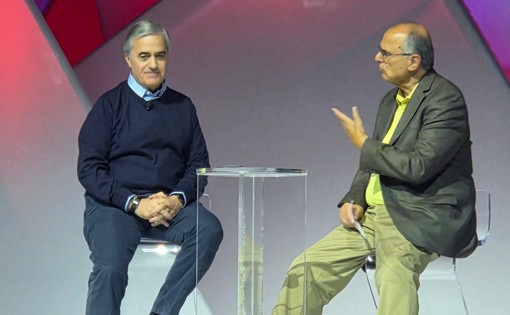
Manolo Arroyo (left), Coca-Cola’s Global Chief Marketing Officer, in conversation with ANA CEO Bob Liodice at the 2026 ANA Masters of Marketing.
From affection to action
The distinction is particularly important for a company whose advertising has helped define emotional brand building.
Coca-Cola hasn’t abandoned emotion, memory, or experience. Quite the opposite. Arroyo describes brands as promises delivered through experiences that create lasting memories and influence behavior.
But the company has changed the way it evaluates whether those experiences are working. Instead of assuming that increasing brand love will necessarily generate more consumption, Coca-Cola is examining which aspects of brand equity actually influence behavior among the audiences it needs to reach.
And Manolo Arroyo has suggested that the relationship can work in both directions.
People may develop stronger affection for a brand because they begin using it, experiencing it, and incorporating it into their lives. In other words, love can follow behavior.
Changing the system, not just the metric
The shift in measurement was part of a much larger transformation.
Coca-Cola simplified a portfolio of more than 400 brands to approximately 170, concentrated on bigger innovation opportunities, accelerated digital marketing, and redesigned its marketing operating system. That last change may be among the most consequential.
A company historically associated with television advertising needed a marketing infrastructure capable of connecting creativity, data, technology, and consumer experiences across markets.
Digital media’s share of Coca-Cola’s investment grew from less than 30% in 2019 toward approximately 70% by the end of 2026.
The company also established Studio X, a globally connected marketing network designed to support common data, technology, and creative capabilities.
This wasn’t simply about shifting spending between media channels. It was about changing how marketing operates.
Where memories become behavior
Arroyo’s framework for building major brands connects four dimensions of consumer experience.
The product itself must deliver. Retail environments influence what consumers notice and remember. Live experiences create connections through sports, music, entertainment, and culture. Digital connects these experiences and extends their reach.
Consider Fanta’s association with Halloween. Rather than treating Halloween as another seasonal advertising occasion, Coca-Cola has developed a broader entertainment and brand experience involving packaging, retail environments, digital content, and live activations.
A can becomes a gateway to entertainment. A retail display becomes part of a larger imaginative world. The brand participates in a cultural occasion rather than simply advertising alongside it.
The ambition is to make the experience memorable enough to influence what consumers choose.
And in a world increasingly shaped by digital discovery and AI-assisted commerce, the ability to connect those moments may become even more important.
The experience to question what matters
Manolo Arroyo’s perspective also reflects a career that extends well beyond traditional marketing.
Before becoming global CMO, he held senior commercial and regional leadership positions across Coca-Cola’s international businesses, including Mexico and Asia Pacific.
That background matters because the challenge he identified was not simply a communications problem. It was a business problem.
The company needed to recruit consumers, simplify its operations, and connect marketing investment more directly with commercial outcomes.
According to Arroyo’s Masters presentation, Coca-Cola has added approximately 160 million consumers since beginning its renewed growth efforts. He also credits the broader transformation with improvements in business performance and brand equity.
Those results cannot be attributed to one marketing metric or initiative alone. But they offer a compelling reason to examine the assumptions behind how marketing defines success. He also emphasized the importance of changing organizational culture—from believing the answers are already known to remaining willing to learn.
Perhaps that is the deeper connection between experience and transformation. Experience can reinforce familiar habits. But it can also provide the confidence to question them.
Coca-Cola’s evolution raises a question that extends far beyond beverages: What if marketing’s greatest contribution isn’t making people say they love a brand, but creating experiences that give them more reasons to choose it?
Emotional connection remains important. The challenge is understanding what makes that connection consequential.