What Happens When an Entire Brand Moves as One?
At Harley-Davidson, Marcus Fischer drew on decades of agency experience to rediscover what made an iconic brand distinctive—and turn that understanding into a global platform built around one word: RIDE.
How do you bring the swagger back to a brand that has spent more than a century defining its own category?
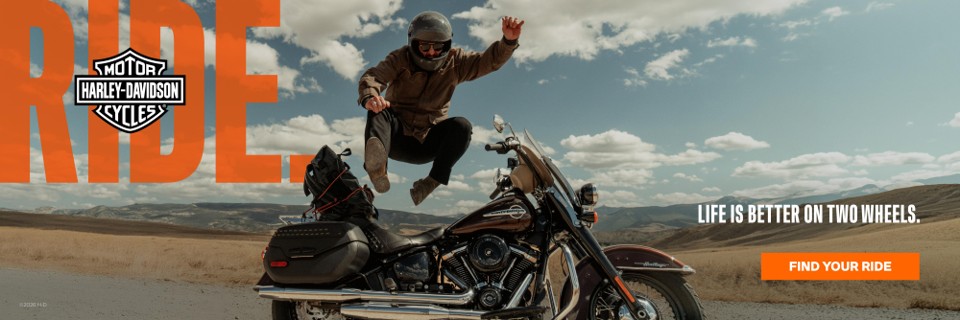
For Harley-Davidson, the answer wasn’t a more elaborate marketing strategy or an entirely new identity. It was a single word. RIDE.
When Marcus Fischer joined Harley-Davidson as Chief Brand Officer in December 2025, he brought three decades of agency experience to a company whose name, motorcycles, and distinctive bar-and-shield logo were recognized around the world.
But recognition and relevance aren’t necessarily the same thing.
Harley-Davidson’s challenge wasn’t simply to remind people of its heritage. It was to reconnect that heritage with the excitement, freedom, and community that made the brand meaningful in the first place—and invite a new generation to participate.
The art of knowing what to simplify
At the ANA Masters of Marketing conference in October, Fischer described marketing as an exercise in reduction: finding the essential idea that can unite an organization. For Harley-Davidson, that idea was RIDE.
It wasn’t intended to be another advertising tagline. It was a verb, an invitation, and an expression of something that had been part of Harley-Davidson since its founding in 1903.
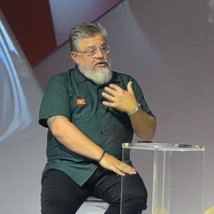
Marcus Fischer, Chief Brand Officer of Harley-Davidson, discusses the brand’s transformation at the 2026 ANA Masters of Marketing.
A motorcycle can be a product someone owns. Riding is an experience someone lives.
That shift—from ownership to participation—also changes the emotional possibilities of the brand. Instead of emphasizing an intimidating image of motorcycle culture, the new platform focuses more on joy, belonging, and the experience of being on the road.
The ambition wasn’t to make Harley-Davidson less distinctive. It was to make its distinctive character more welcoming.
One idea. An entire organization.
The RIDE platform launched globally in April 2026, accompanied by a refreshed visual identity that brought back the historic Harley-Davidson bar-and-shield logo.
Its debut film featured real riders and Willie Nelson’s “On the Road Again,” connecting the brand’s heritage with a more inclusive expression of motorcycle culture.
But the more interesting transformation happened behind the campaign.
Marcus Fischer described how the platform was introduced first to employees, then to dealers, and finally to consumers. That sequence suggests a recognition that global brand coherence cannot simply be imposed through advertising. The people representing the brand must understand and participate in its direction.
A dealer, an employee, a rider, and a prospective customer may experience Harley-Davidson differently. Yet a clear organizing idea can help those experiences reinforce one another.
In a global organization, that is no small undertaking. And it demonstrates why simplicity shouldn’t be confused with superficiality. Arriving at one word that can guide countless decisions may require considerably more judgment than producing a lengthy strategy document.
What experience makes possible
Marcus Fischer’s background adds another dimension to the story.
After decades working with brands from the agency side—including at Carmichael Lynch, which has a long history with Harley-Davidson—he entered a corporate leadership role with a broad perspective on how brands are built, interpreted, and sometimes complicated by their own organizations.
That experience didn’t eliminate the challenges of changing an established business. Nor does the speed of the RIDE launch prove that Harley-Davidson’s broader commercial transformation is complete.
But it may have helped him recognize something essential: the brand didn’t need to invent a new reason to exist. It needed to make its original reason more visible, relevant, and actionable.
There’s a difference between preserving heritage and being constrained by it.
And perhaps that is where experienced judgment becomes particularly valuable.The question isn’t simply how quickly a company can introduce a new campaign. It’s how quickly it can recognize what matters enough to bring the organization together.
For Harley-Davidson, the answer was hiding in plain sight. RIDE.