Scaling Authenticity in an AI World
Why what feels real is becoming more valuable—and more selective.
Marketing has never been more capable.
Ideas can be generated instantly.
Content can be produced at scale.
Experiences can be designed, extended, and optimized across platforms.
And yet, something is shifting.
Not in what marketing can do—
But in what people choose to believe.
In a world where anything can be created, credibility increasingly comes from what can’t be faked.
Signal 1: Authenticity Isn’t Disappearing. It’s Becoming Harder to Earn
As AI accelerates production, authenticity hasn’t lost value.
It has gained pressure.
In categories like petcare, this is becoming visible. Brands are leaning into real animals, unscripted behaviors, and moments that feel observed rather than constructed.

Not because they lack tools.
But because the presence of tools changes perception.
When everything can be polished, what feels real often carries slight imperfection—something unplanned, unrefined, or simply not optimized.
Authenticity, in this context, isn’t accidental.
It’s increasingly selected and structured.
Signal 2: Real Lives Don’t Simplify—Even When Marketing Does
This shift isn’t just creative.
It’s human.
New research from Charlotte Davis, developed as part of her dissertation at the University of St Andrews and informed by her work with The Internationalist, explores the experience of women returning to work after becoming mothers.
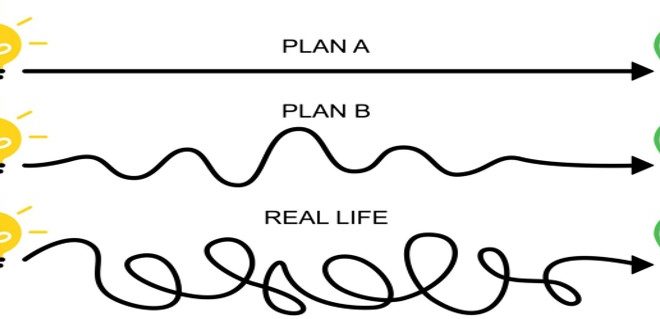
What emerges is not a single narrative.
It is two, happening at the same time.
Some describe fragmentation:
“It’s not being able to show up fully to either side of my life.”
Others describe growth:
“I feel more grounded, empathetic, and connected.”
Both are true.
Her work suggests that it is not the change itself that shapes experience, but how that change is interpreted. When identity shifts are framed as loss, feelings of overload increase. When framed as growth, the same changes can lead to greater focus, empathy, and effectiveness.
This is more than a workplace insight.
It is a reminder that real lives are inherently contradictory.

They do not resolve into a single message, a single tone, or a single narrative.
For marketers, that creates a tension.
Because marketing often depends on clarity.
But people live in complexity.
And increasingly, they recognize when that complexity has been reduced too far.
Signal 3: When Everything Is Available, Disconnection Becomes Intentional
As experiences expand across platforms, a counter-signal is emerging.
Not more engagement.
But less.
Brands like KitKat are leaning into the idea of stepping away—creating space from screens rather than pulling people further into them.
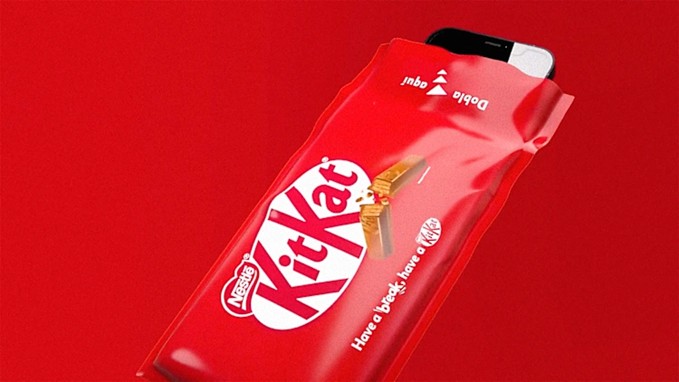
KitKat’s new wrapper is a pouch designed to block signals to your phone.
This isn’t about rejecting digital.
It’s about acknowledging that constant connection doesn’t always feel like control.
In an always-on environment, disconnection becomes something people choose—and increasingly, something brands can enable.
What This Means
These signals point in different directions.
But they converge on the same shift.
As marketing becomes more capable of creating anything, people are becoming more selective about what they accept as real.
Authenticity, then, is no longer just about truth in messaging.
It’s about recognition.
What feels observed rather than constructed.
What reflects experience rather than simplifying it.
What allows for contradiction rather than resolving it too quickly.
Because in a world of infinite creation, the most credible signals are often the ones that resist being fully engineered.
The challenge for marketing isn’t whether it can create.
It’s whether what it creates still feels true.
Charlotte Davis is a final-year Psychology student at the University of St Andrews and contributes to The Internationalist’s Marketing Makes a World of Difference initiative.