The Name’s Bond. The Brand Is Timeless.
Why Every Great Brand Needs a New James Bond …
Robert Pattinson‘s selection as the next James Bond has reignited a familiar debate. Who was the best Bond? Who most convincingly captured the character? And, perhaps most importantly, can someone associated with an entirely different cultural phenomenon bring something new to a franchise that has endured for more than sixty years?
It’s a conversation that brings together people of remarkably different ages, each with a favorite Bond—and often very different reasons for their choice.
I was reminded of this recently during a conversation with my longtime friend Dave McCaughan, an Australian marketing strategist whose years working with major global brands, including Coca-Cola, have given him a distinctive perspective on what makes people connect with brands.
Dave observed that his father, he himself, and his children all have opinions about James Bond. Each grew up with a different interpretation of the character, yet they share an affection for the franchise.
That led me to recall something Carmen d’Ascendis, a former global marketing leader at Brown-Forman, told me more than a decade ago. I had devoted a chapter to Carmen’s thinking in my 2014 book, The Reinvention of Marketing, particularly his perspective on how established brands could evolve without losing their essential identity.
Carmen had spent years helping build Jack Daniel’s around the world. He understood the extraordinary loyalty that established brands can inspire, but also the danger of assuming that what made a brand relevant yesterday would necessarily keep it relevant tomorrow.
He used James Bond to explain the dilemma.
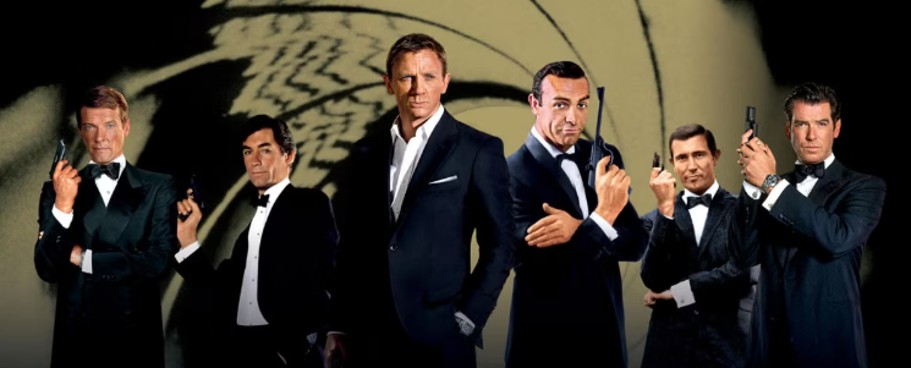
While different actors have portrayed Bond in ways that reflect their times, the essential character has remained recognizable.
As Carmen put it, “While the ‘expression’ or relevant messaging changes, the ‘DNA’ of the brand doesn’t.”
He pointed to the contrast between the fantastical world of Moonraker and the more complicated, flawed hero of Skyfall. Both were unmistakably Bond, but each belonged to a different cultural moment.
His advice to marketers was wonderfully straightforward: “Don’t protect a brand from evolution. It’s a mindset change from defense to offense.”

Photo Credit: Amazon MGM
The opportunity to bring more people into the story
Today, that advice seems especially relevant.
Consider the dilemma facing many established brands. They have customers who have loved them for decades, perhaps since their twenties or thirties. Those relationships represent enormous accumulated value.
Yet the same brands need to attract people who may have very different expectations, interests, and reasons for choosing them.
Too often, marketers approach this as an either-or decision. Preserve the traditional brand and risk limiting its appeal to new audiences. Or reinvent the brand to attract new customers and risk losing some of what made it distinctive in the first place.
But perhaps that’s the wrong way to frame the challenge.
Carmen made another distinction that has stayed with me. He described the difference between “gateway values,” which initially attract someone to a brand, and “retention values,” which create deeper and more enduring loyalty.
“What draws someone in to a brand is not what keeps them there,” he explained.
Someone discovering James Bond through Robert Pattinson may have very different reasons for watching than someone who grew up with Sean Connery. Yet both must ultimately find something compelling in the same character.
It’s an insight that suggests a brand can offer different points of entry without sacrificing what makes it distinctive.
And sometimes those entry points appear in unexpected places.
During our conversation, Dave mentioned that his daughter works on Jack Daniel’s at a public relations agency. One of the attractions of the assignment was the brand’s involvement with Formula One and McLaren.
I couldn’t help smiling at the coincidence.
Here we were discussing an insight from a former Jack Daniel’s marketing leader, using James Bond as an example of enduring relevance, while Dave’s daughter was discovering her own professional connection to that same brand through an entirely contemporary cultural association.
What brings different people to the same brand?
Dave has long challenged the marketing industry’s reliance on generational labels. His argument is that people’s motivations, circumstances, and stages of life often reveal more than the year they were born.
And perhaps that’s what makes the Bond analogy so interesting. The franchise doesn’t simply replace one audience with another. It has the opportunity to bring new audiences into a story that others have followed for decades.
People of different ages may share remarkably similar needs for belonging, independence, discovery, security, or self-expression. What changes is the cultural context in which those needs are expressed.
And people of the same generation may have entirely different priorities depending on their circumstances.
Perhaps the real opportunity isn’t to make brands appeal to one generation at the expense of another.
It’s to understand how a brand can remain meaningful as people’s lives—and the world around them—change.
The enduring value of reinvention
James Bond provides a wonderfully accessible illustration.
The franchise has endured not because every Bond has been the same, but because each interpretation has found a way to make a familiar character relevant to a new moment.
Not every change has been universally welcomed. Nor does every reinvention guarantee success.
But the willingness to evolve has been essential to keeping the story alive.
The same challenge confronts brands with decades of history and deeply committed customers.
Their heritage can be an extraordinary advantage. Yet heritage alone cannot guarantee future growth.
The task is to recognize what deserves to endure, while remaining curious about the new meanings, experiences, and relationships that can carry a brand forward.
As we look toward 2027, this is a question The Internationalist intends to explore further: How can established brands build on what made them successful while creating new reasons for more people to become interested?
Perhaps James Bond has been showing us one way for more than sixty years.
The character remains. The interpretation evolves. And the story continues.