When AI Becomes a Cost, Not a Capability
Most organizations don’t struggle with a lack of ideas.
They struggle with the discipline to turn those ideas into decisions.
AI has amplified that gap.
What begins as exploration too often becomes a permanent state—an ongoing series of pilots, tests, and initiatives that never quite reach production. Investment continues. Progress is reported. But meaningful outcomes remain elusive.
As GenAI consultant Stefanos Karagos of CAIO Group puts it:
You don’t have an AI strategy. You have an AI campaign with no end date.
The issue is not experimentation.
It’s the absence of an endpoint.
From Exploration to Habit
Over the past several years, AI has been introduced into organizations as a space for learning—something to explore, test, and gradually integrate.
That approach made sense early on.
But in many cases, exploration has quietly become habit.
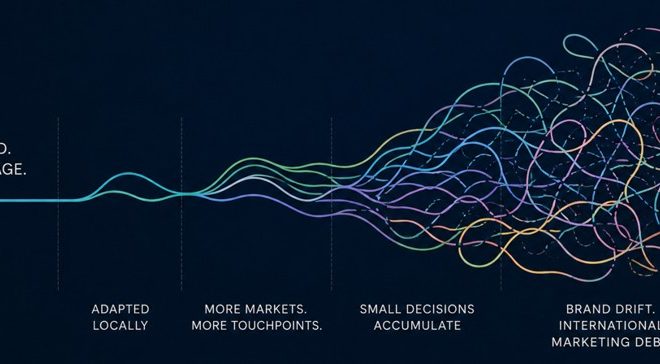
New initiatives are launched before earlier ones conclude. Pilots accumulate without clear pathways to scale. Teams remain in a constant state of activity, without ever arriving at a decision point.
The result is not failure in the traditional sense.
It is drift.
The Cost of Indecision
This might be sustainable if AI were inexpensive.
It isn’t.
Behind every initiative sits a growing set of costs: data preparation, integration, talent, time, and organizational attention. These costs compound when projects remain open-ended.
What appears to be progress can, over time, become a form of hidden inflation—where resources are consumed without corresponding impact.
In a broader environment where media costs are rising and attention is becoming more expensive to secure, that lack of discipline becomes harder to ignore.
What the Winners Do Differently
The organizations seeing real returns from AI are not necessarily those investing the most.
They are the ones making the clearest decisions.
They define outcomes before selecting technology.
They focus on a small number of high-value applications.
They measure performance against business results—not activity.
Most importantly, they know when to stop.
Exploration has a role.
But it cannot be the operating model.
From Capability to Commitment
The conversation around AI often centers on capability—what the technology can do, how quickly it is advancing, and where it might lead.
But capability without commitment rarely translates into value.
At some point, organizations have to move from asking what is possible to deciding what matters.
That shift—from possibility to priority—is where most of the value is created.
The Discipline to Decide
In a system where both media and technology are becoming more expensive, the cost of indecision is rising.
The organizations that benefit from AI will not be those that explore the longest.
They will be those that decide sooner—and act with greater clarity.